1 Shearing
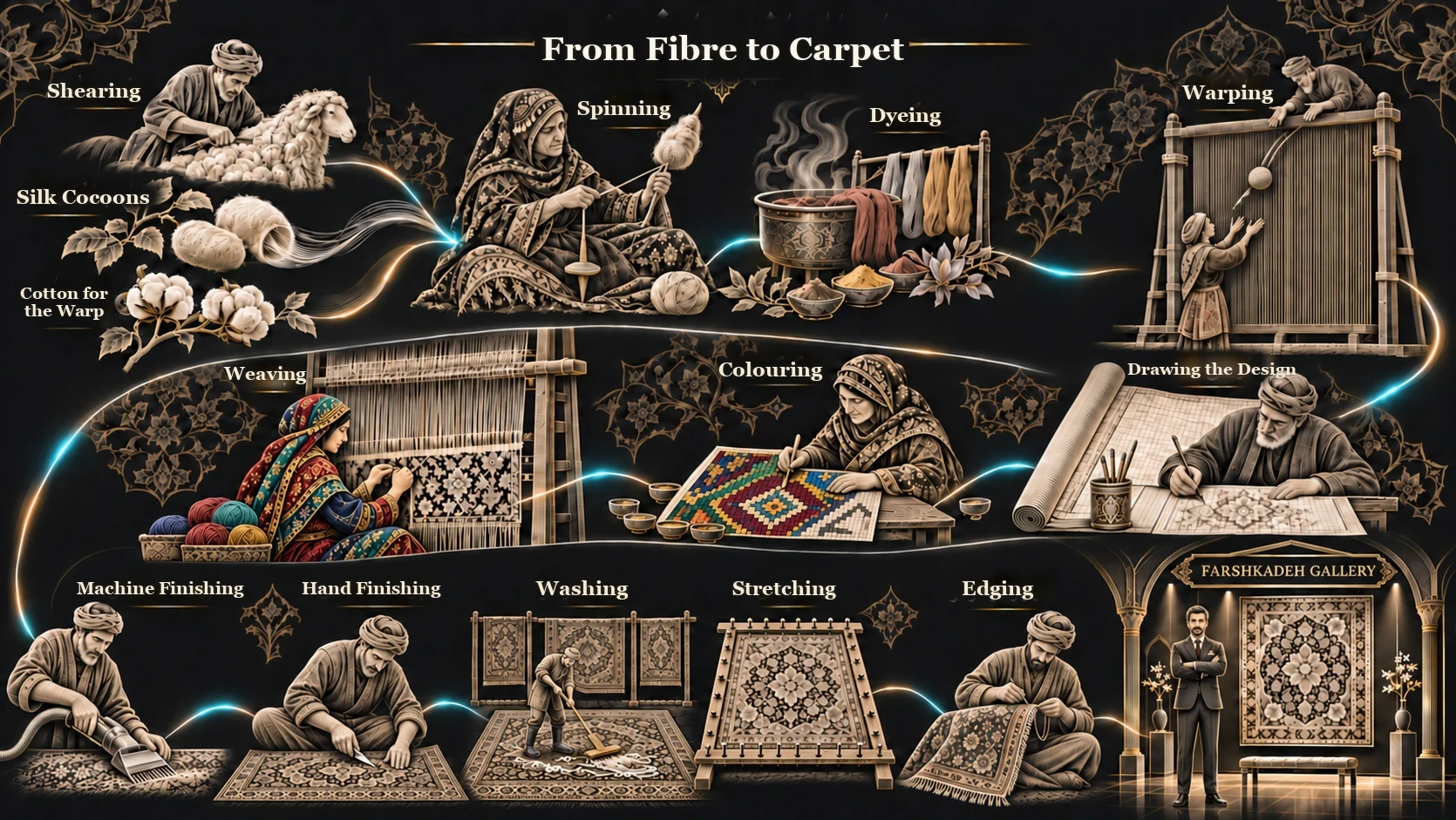
Spring clip gives the longest staple and the richest natural lanolin; the fleece is then scoured and carded.
Spring clip gives the longest staple and the richest natural lanolin; the fleece is then scoured and carded.
Cocoons are simmered to soften the sericin gum, so one continuous filament can be reeled off.
Plied cotton makes the warp and weft: it does not stretch, so it holds the rug's dimensions and structure.
Carded fibre is twisted on spindle or wheel, then plied; an even twist decides the lustre of the pile.
Skeins are mordanted with alum, then steeped in madder, weld, walnut husk or indigo for a fast colour.
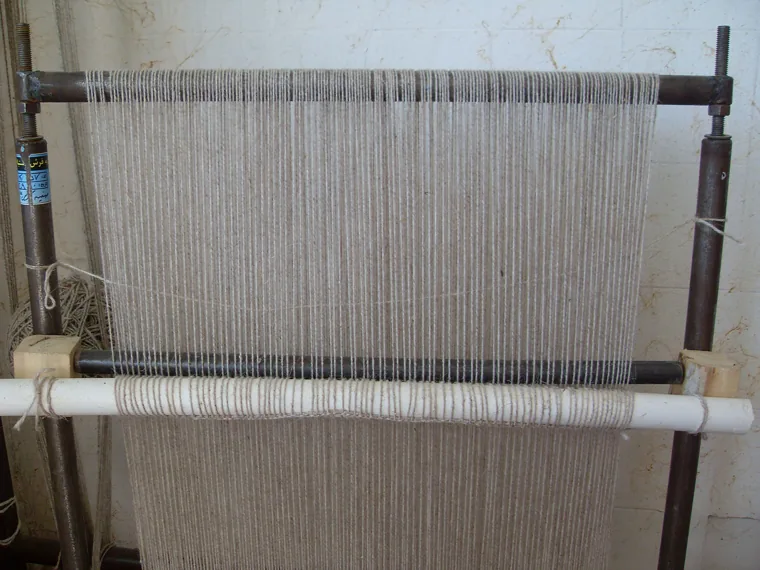
Warps run between the upper and lower beams at equal tension; their density sets the knot count and flatness.
The design is drawn on squared paper, one square to a knot, composing medallion, corners, arabesques and palmettes.
Square by square the colourist assigns each knot's shade, turning the design into the weaver's exact guide.
Each Persian or Turkish knot wraps two warps; the weft is passed through the row and beaten down with the comb.
Off the loom, loose fibres are singed away and a machine levels the pile to an even height.
With special blades, the finisher takes the pile to its final height, leaving the lines of the design crisp.
The rug is lathered with mild soap and rinsed until the water runs clear, softening the handle and waking the sheen.
The damp rug is nailed and stretched on a frame so it dries square, free of skew and ripples.
The long edges are overcast and both ends secured with double knots, locking the weave and keeping the fringe.
After a final check of size, knot count and quality, the rug hangs in our gallery with its certificate.
Choose a tool to read about it.
 The loom
An upright wooden or metal frame with the warp strung between its upper and lower beams. On the Tabriz roller loom, the finished part turns behind the frame, so long rugs are woven from one seat.
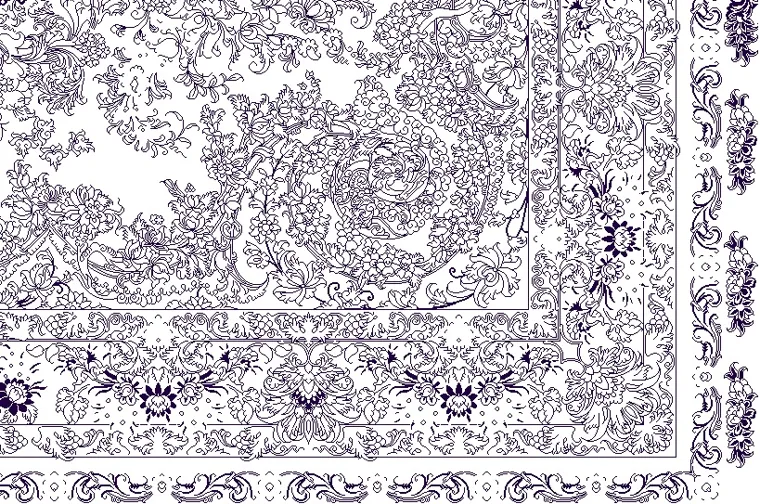 The design
Drawn on squared paper, one square to a knot. In the old workshops the sheet was mounted on a board and hung at the loom, so the weaver could read it row by row.
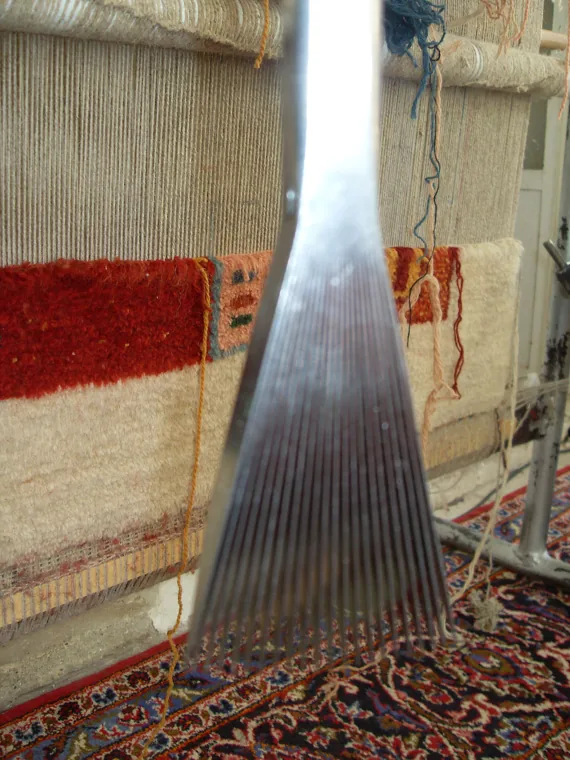 The beating comb
A heavy metal comb whose fine teeth slip between the warps. After each row it beats knots and weft down; the rug's density and firmness depend on it.
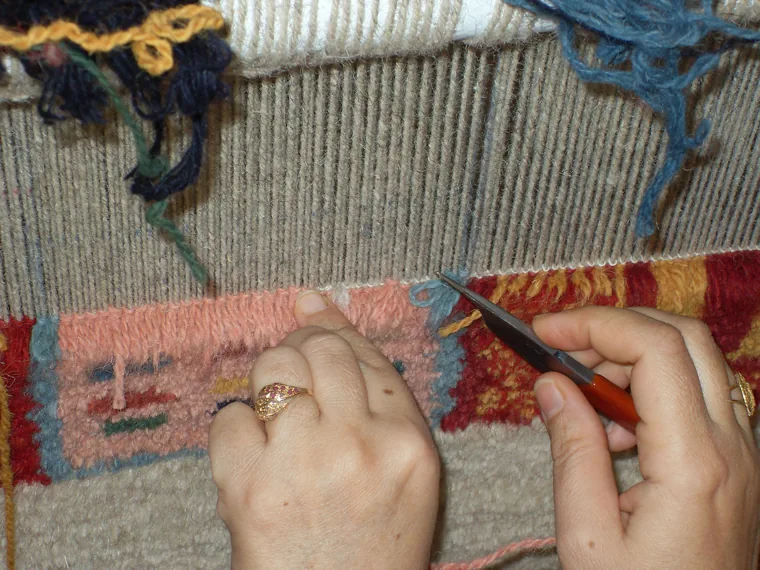 The weaver's knife
A short, keen blade that cuts the yarn after every knot, shaped to stay in the hand as the weaver keeps tying.
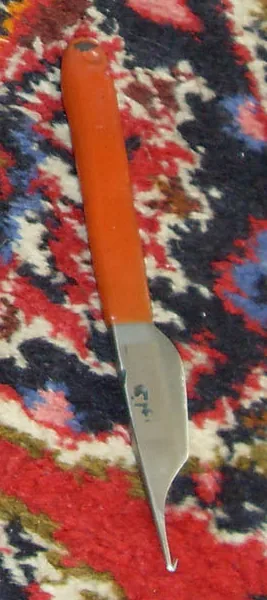 The hook
The mark of the Tabriz weaver: its bent tip draws the yarn round the warp for a quicker, more even knot, and its blade cuts the yarn in the same motion.
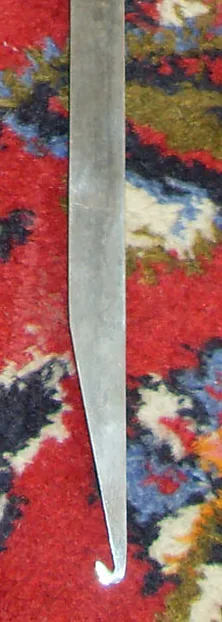 The weft rod
A long metal rod with a hooked tip that carries the weft through the warps and helps keep the front and back warps apart.
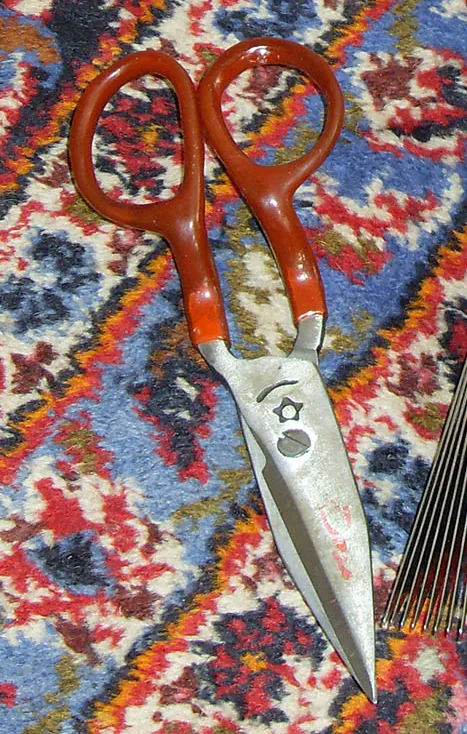 Special shears
Clipping shears level the pile every few rows. The smaller thread shears remove stray ends during servicing; the final finish is done with special blades.
Photos: Fatemeh Ahmadi (CC BY-SA 3.0) · Design: Farid Nazifi (CC BY-SA 4.0)