A Coleção Privada
2026-11-02
The Private Collection is a selection of Farshkadeh's rarest pieces, available only to members. Request membership to view it.
2026-11-02
The Private Collection is a selection of Farshkadeh's rarest pieces, available only to members. Request membership to view it.
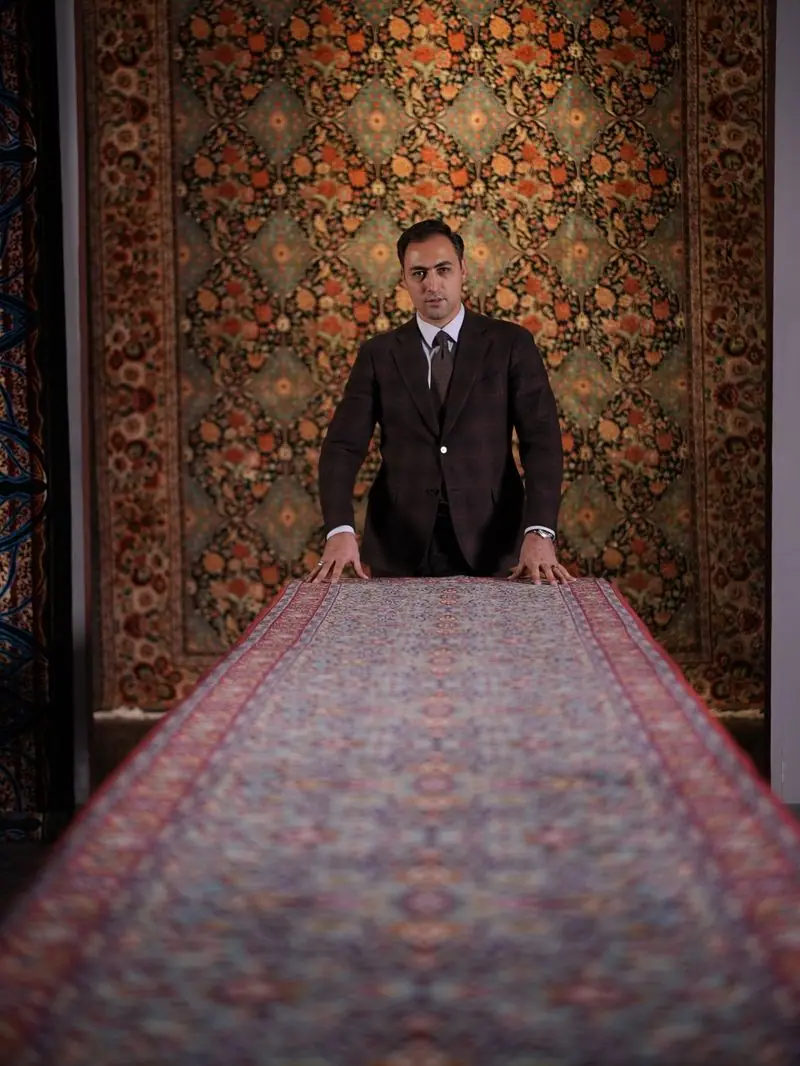
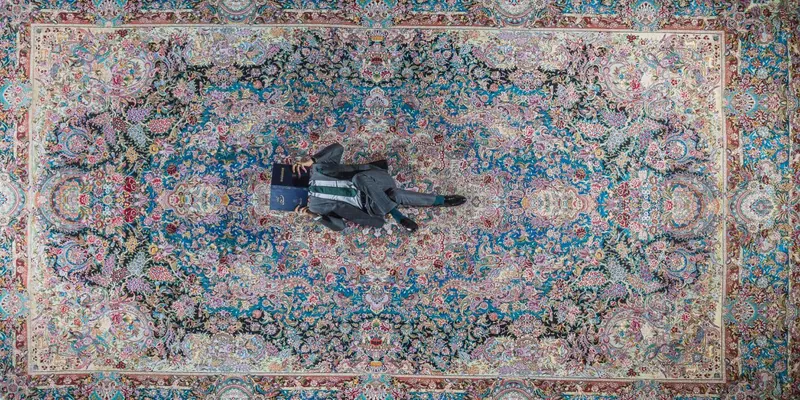
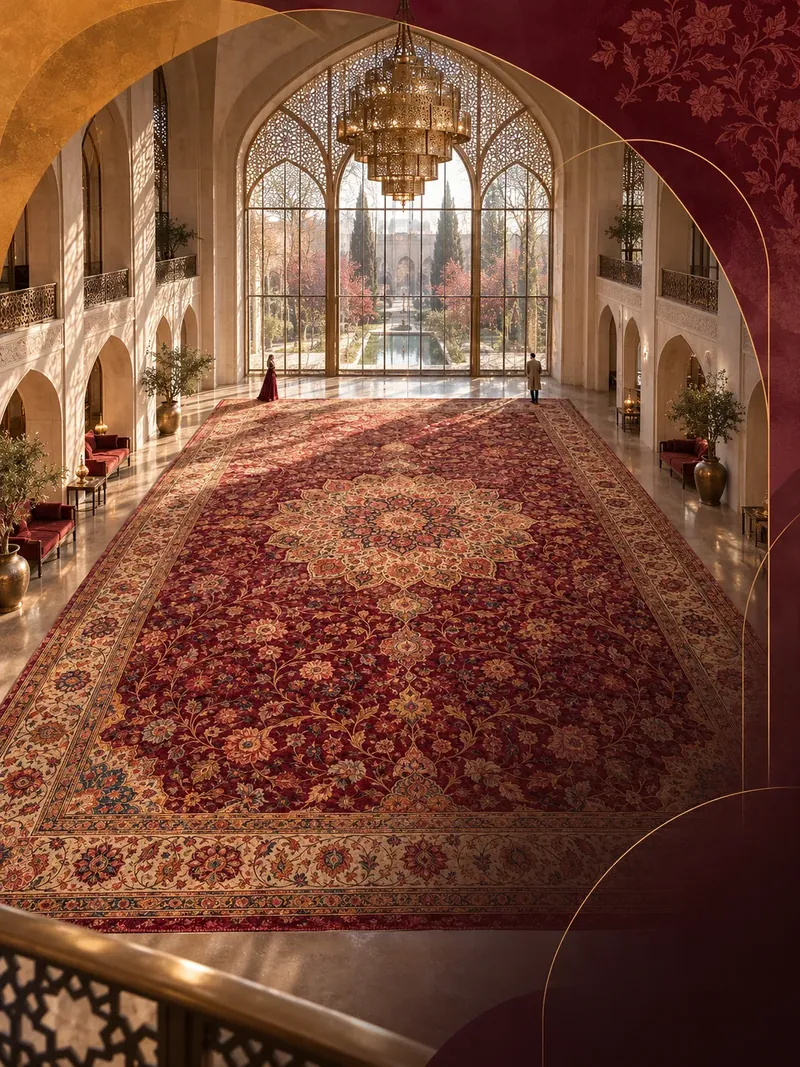
Farshkadeh Azarakhsh, one of the leading houses for handmade Persian rugs, holds a special place in presenting this authentic Iranian art, with a wide collection of fine and antique rugs and works by Iran's master weavers. The gallery sits in Iran Mall, Tehran, and aims to be more than a shop: a place where rug lovers, collectors and buyers can experience the art, history and culture of Iran. A treasury of Iranian art and history At Farshkadeh Azarakhsh, a rug is never just a decorative object; every handwoven piece tells a story of the culture, creativity and skill of generations of Iranian artists. From the fine rugs of Tabriz, Isfahan, Qom and Kashan to treasured works from Kerman, Nain and other renowned weaving centres, the collection shows the many faces of the handmade rug. Silk rugs, kurk-and-silk pieces, antiques, historic designs and grand-scale weavings are among the highlights of the collection. Rare masterpieces of weaving Farshkadeh Azarakhsh is known for pieces of striking size, exceptional fineness and high artistic value. Grand-scale rugs with intricate patterns, works attributed to celebrated masters and antique pieces several decades old are all part of the collection. Among them, the 30-square-metre "Golestan" rug designed by Master Najafzadeh stands out as a remarkable example of creativity in Persian weaving: no motif in its design is repeated, and every part of the rug has a visual identity of its own. A bridge between Persian art and the world The handmade Persian rug has long been one of the best-known symbols of Iranian art and culture around the world. By presenting a collection of distinguished handwoven pieces, Farshkadeh Azarakhsh works to introduce this precious heritage to admirers in Iran and abroad. While keeping the craft authentic, the gallery hopes to open the artistic, historical and cultural values of the Persian rug to a new generation and to audiences worldwide. Farshkadeh Azarakhsh: more than a rug gallery What sets Farshkadeh Azarakhsh apart is not only the variety of its rugs but an artist's eye in choosing and presenting works, each of which can tell a part of the history of Iranian art. A visit to Farshkadeh Azarakhsh is a chance to see an art handed down from generation to generation over centuries, and still one of the most precious expressions of Iranian culture today. Farshkadeh Azarakhsh, in Iran Mall, Tehran, welcomes everyone who loves the authentic art of the handmade Persian rug.
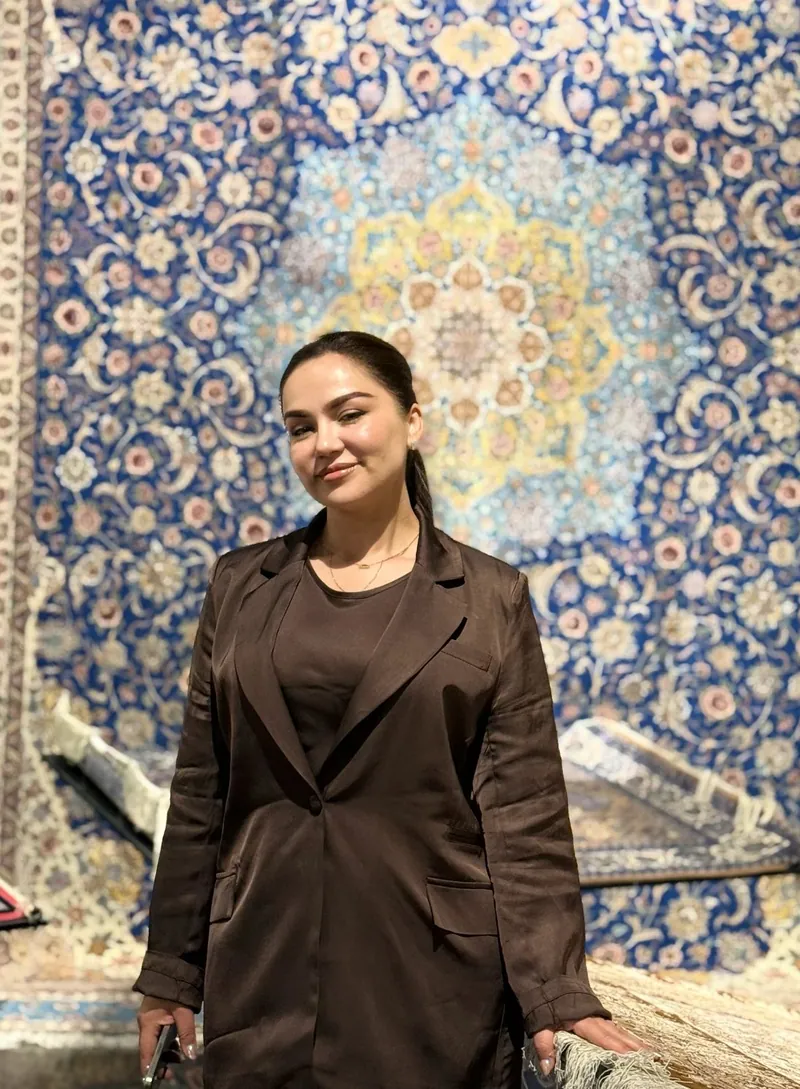
MaisThe celebrated Tajik singer Nigina Amonqulova was a guest of Farshkadeh Azarakhsh during her visit to Iran, where she saw handmade Persian rugs up close. Born in Panjakent, Tajikistan, in 1986, she began her professional career in the late 2000s. She is known for Persian-language songs and traditional music, often performed in traditional dress. Last year, after a concert with Vahid Taj, she became better known among Iranian audiences and travelled to Iran. During the visit, she and her companions viewed the gallery's rugs and pictorial rugs and talked about their designs. The Persian language and its arts link Iran and Tajikistan. Just as Persian song crosses borders, the Persian rug speaks a language familiar to everyone who shares that culture. Farshkadeh Azarakhsh thanks Nigina Amonqulova and her companions for their warm visit.
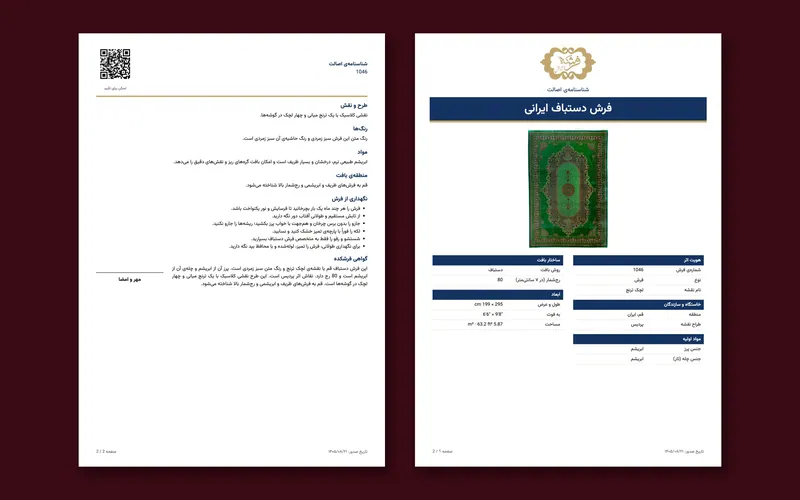
MaisEvery rug that reaches your home from Farshkadeh Azarakhsh has its own certificate of authenticity: a document that records the identity, origin, materials and features of that very rug, and stays with it for good. The picture at the top of this page is the real certificate of a rug from our treasury: a silk Qom rug with a medallion-and-corner design, number 1046. Why a certificate matters A handmade rug is a work of art that stays in a family for years, often for generations. Its certificate confirms its authenticity, supports its value over time, and gives you a trusted document for insurance, resale or passing it on. What the Farshkadeh certificate records The first page is the rug's portrait: its photograph and a table of details in several parts. Identity: rug number, type and design name. Origin and makers: weaving region and design artist. Materials: pile and warp. Structure: weaving method (handmade) and knot density per 7 cm (raj). Dimensions: length and width in centimetres and feet, and area in square metres and square feet. The second page tells the rug's story: Design, colours, materials and weaving region, each in a few clear sentences. Care guidance, so your rug stays beautiful for years. The Farshkadeh statement confirming the rug's details, with space for stamp and signature and the date of issue. The QR code: authenticity in one scan A QR code is printed at the top of the second page and on every rug's label. Scan it with your phone camera and the online page of that rug opens on the Farshkadeh website, so you can see that the certificate in your hand matches our record. Each rug has its own code, which cannot be guessed. For the owner: a private record The online certificate page shows the rug's details to everyone, but the purchase details and service history, such as washing and restoration at Farshkadeh, are shown only with the owner's private PIN or when the owner is signed in. Your private information stays private. Two languages, print and digital The certificate is prepared in Persian and English, both as a printed document and as a PDF you can keep or send, ideal for clients who take a rug to another country or give it as a gift. If you own a Farshkadeh rug and would like its certificate, or have a question about your rug's certificate, please contact our team at the galleries.
MaisThe handmade Persian rug has always been a traveller, from the caravans of the Silk Road to the palaces and great museums of the world. Farshkadeh Azarakhsh carries that old journey to your home today: wherever you are, the rug you choose is delivered to your door. Three galleries, one worldwide network Farshkadeh ships from three galleries, each a gateway to part of the world: Tehran, Iran: the heart of the Farshkadeh treasury and closest to the weaving workshops; routes to Europe, Russia, Turkey, East Asia and North America. Muscat, Oman: the gateway to the Persian Gulf countries, India, Southeast Asia, Australia and Africa. São Paulo, Brazil: the gateway to South and Central America, with shorter routes to the United States, Portugal, Spain and West Africa. The map at the top of this page shows that network: green routes from Iran, red from Oman and gold from Brazil, linking our galleries with cities from London, Paris and Berlin to Dubai, Singapore and Sydney, and from Buenos Aires and Mexico City to New York and Los Angeles. From choosing to delivery Choose: browse the online treasury or the Farshkadeh flip catalogue, with photos, size, material, knot density and a description of every rug. If you have something particular in mind, our team will help you find the right size, colours and design for your space. Ask: before you buy, contact us on WhatsApp or call our galleries about any rug, and about the cost and timing of delivery to your country. Packing: every rug is packed with care, suited to its material and size, so it arrives safe and sound. Certificate: every rug travels with its Farshkadeh certificate of authenticity, recording its weaving region, materials, size and features. Delivery to your door: the rug comes all the way to your home, and our team is there to answer your questions at every step. Care after you buy Our relationship does not end at delivery. Washing, restoration and care are lasting Farshkadeh services, so that the rug that reaches your home today stays with your family for generations. For timing, cost and terms of delivery to your country, please contact our team in Tehran, Muscat or São Paulo.
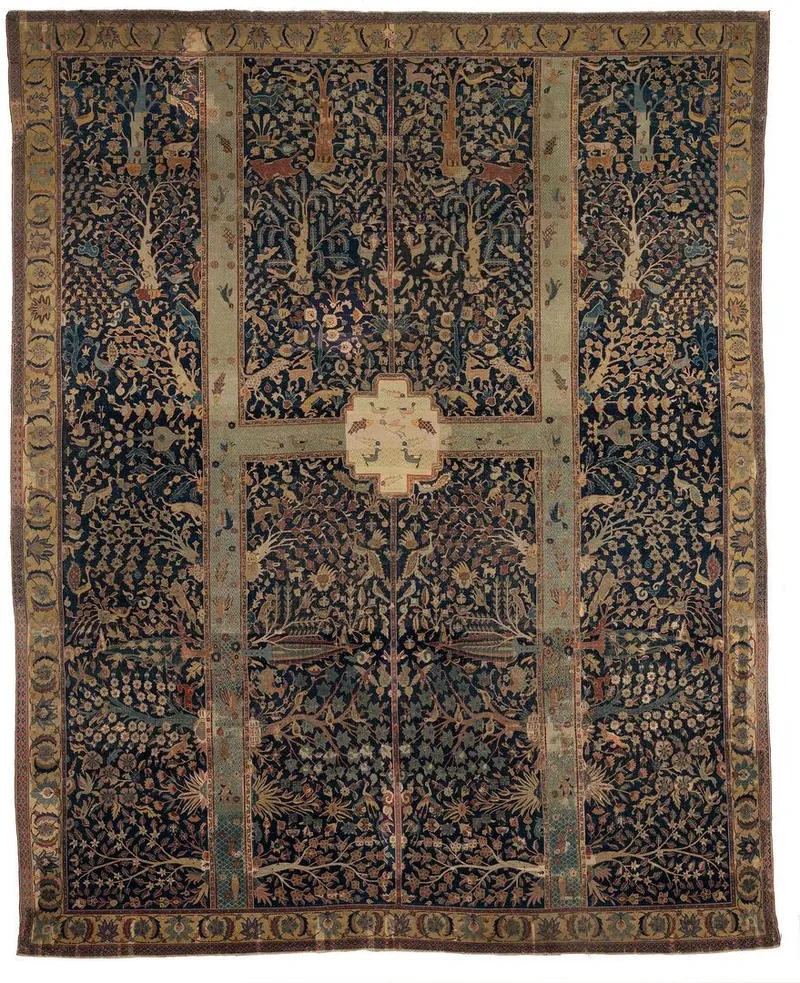
MaisThe Wagner Garden Carpet is one of the most precious surviving Persian garden carpets and a masterpiece of Safavid weaving. About 400 years old, it was woven in Kerman. It holds a special place in world art history not only for the fineness of its weaving and its complex design but for its rare portrayal of the Persian garden. The Metropolitan Museum of Art has described it as the third-oldest known Persian garden carpet. A garden in eternal spring Nature is shown here in an astonishingly lively way. Streams, cypress trees, flowering shrubs, birds, fish and many animals sit together in an ordered space. Unlike many traditional carpets with a central medallion and geometric or arabesque patterns, the Wagner carpet presents a whole Persian garden. Its layout follows the historic chahar bagh, the four-part garden in which channels, pools and green spaces give nature a geometric order. Two long water channels, joined by crossing paths, divide the garden into its parts, giving the whole carpet a sense of flowing water and life. Animals and symbols of nature Among the leaves and flowers are lions, leopards, deer, foxes, peacocks, ducks, doves, butterflies and fish. They lift the carpet beyond decoration into a living world of peace and beauty, and even the struggle of hunter and hunted. The Persian garden can be read as a symbol of paradise, abundance and natural harmony, ideas that run deep in Persian poetry and literature. Why "Wagner"? The name has nothing to do with the place of weaving or the Persian designer: it comes from a German owner of the carpet in the early twentieth century. In 1939 the Scottish collector Sir William Burrell bought the carpet and kept it in his own castle. In 1944 he gave his art collection, including this carpet, to the city of Glasgow. On show around the world The Wagner Garden Carpet was shown in 2018 at The Metropolitan Museum of Art in New York and then at the Museum of Fine Arts, Houston, and was also presented at the Aga Khan Museum in Toronto. It belongs to The Burrell Collection in Glasgow and, since the collection reopened in 2022, has been on display among its major works. Its place in the history of the Persian rug The Wagner Garden Carpet is a precious record of how carpet weaving, Persian garden design and Safavid aesthetics came together. It shows that centuries ago Persian artists could create a complex landscape, full of movement and story, with nothing but warp, weft and knots. Its many plants and animals, the precise order of its water channels and its countless details make it one of the outstanding works of Iran's artistic heritage. Details of the Wagner Garden Carpet Name: Wagner Garden Carpet Period: Safavid, early 17th century Place: Kerman, Iran Size: 530.9 × 431.8 cm (about 22.9 m²) Pile: wool Warp: cotton Weft: wool, cotton and silk Design: Persian garden, chahar bagh Held at: The Burrell Collection, Glasgow, Scotland Museum number: 9.2 Sources: Glasgow Museums Collections (collections.glasgowmuseums.com), The Metropolitan Museum of Art and The Burrell Collection. Photos from Wikimedia Commons, freely licensed: full view of the carpet (public domain); the carpet on display at the Burrell Collection, by Oliver Dixon (CC BY-SA 2.0).
Mais