 Conhecimento sobre tapetes · 2026-11-12
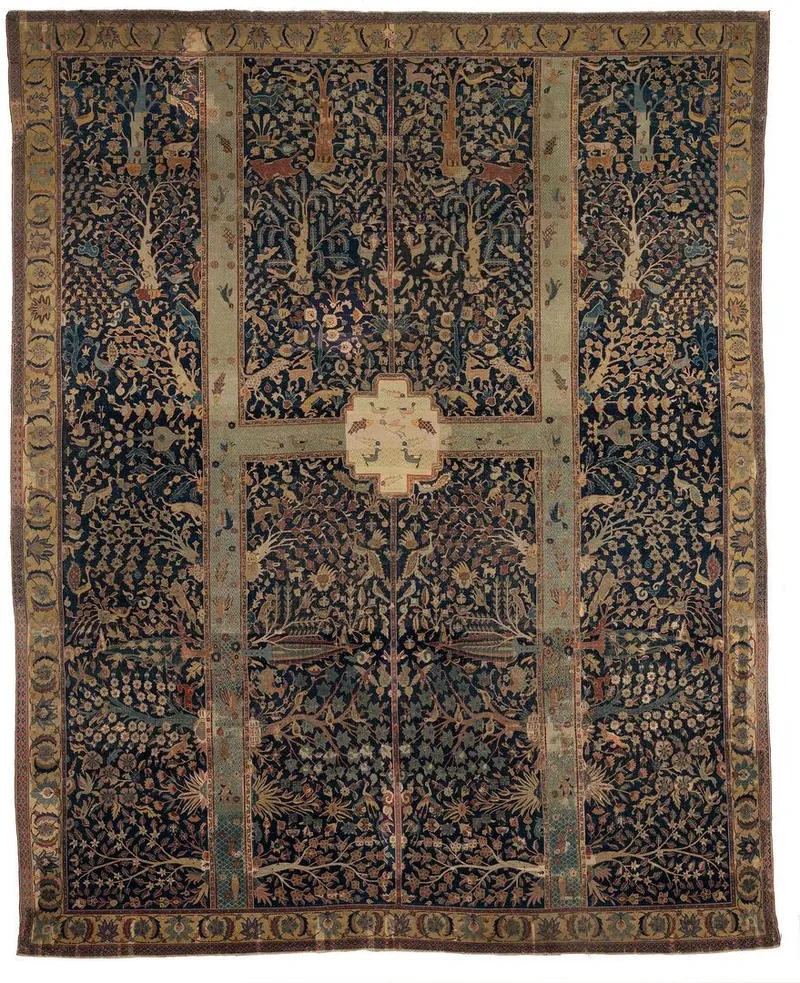
The Wagner Garden Carpet is one of the most precious surviving Persian garden carpets and a masterpiece of Safavid weaving. About 400 years old, it was woven in Kerman.
It holds a special place in world art history not only for the fineness of its weaving and its complex design but for its rare portrayal of the Persian garden. The Metropolitan Museum of Art has described it as the third-oldest known Persian garden carpet.
A garden in eternal spring
Nature is shown here in an astonishingly lively way. Streams, cypress trees, flowering shrubs, birds, fish and many animals sit together in an ordered space.
Unlike many traditional carpets with a central medallion and geometric or arabesque patterns, the Wagner carpet presents a whole Persian garden. Its layout follows the historic chahar bagh, the four-part garden in which channels, pools and green spaces give nature a geometric order.
Two long water channels, joined by crossing paths, divide the garden into its parts, giving the whole carpet a sense of flowing water and life.
Animals and symbols of nature
Among the leaves and flowers are lions, leopards, deer, foxes, peacocks, ducks, doves, butterflies and fish. They lift the carpet beyond decoration into a living world of peace and beauty, and even the struggle of hunter and hunted.
The Persian garden can be read as a symbol of paradise, abundance and natural harmony, ideas that run deep in Persian poetry and literature.
Why "Wagner"?
The name has nothing to do with the place of weaving or the Persian designer: it comes from a German owner of the carpet in the early twentieth century.
In 1939 the Scottish collector Sir William Burrell bought the carpet and kept it in his own castle. In 1944 he gave his art collection, including this carpet, to the city of Glasgow.
On show around the world
The Wagner Garden Carpet was shown in 2018 at The Metropolitan Museum of Art in New York and then at the Museum of Fine Arts, Houston, and was also presented at the Aga Khan Museum in Toronto. It belongs to The Burrell Collection in Glasgow and, since the collection reopened in 2022, has been on display among its major works.
Its place in the history of the Persian rug
The Wagner Garden Carpet is a precious record of how carpet weaving, Persian garden design and Safavid aesthetics came together. It shows that centuries ago Persian artists could create a complex landscape, full of movement and story, with nothing but warp, weft and knots.
Its many plants and animals, the precise order of its water channels and its countless details make it one of the outstanding works of Iran's artistic heritage.
Details of the Wagner Garden Carpet
Name: Wagner Garden Carpet
Period: Safavid, early 17th century
Place: Kerman, Iran
Size: 530.9 × 431.8 cm (about 22.9 m²)
Pile: wool
Warp: cotton
Weft: wool, cotton and silk
Design: Persian garden, chahar bagh
Held at: The Burrell Collection, Glasgow, Scotland
Museum number: 9.2
Sources: Glasgow Museums Collections (collections.glasgowmuseums.com), The Metropolitan Museum of Art and The Burrell Collection.
Photos from Wikimedia Commons, freely licensed: full view of the carpet (public domain); the carpet on display at the Burrell Collection, by Oliver Dixon (CC BY-SA 2.0).
Mais
 Conhecimento sobre tapetes · 2026-11-12
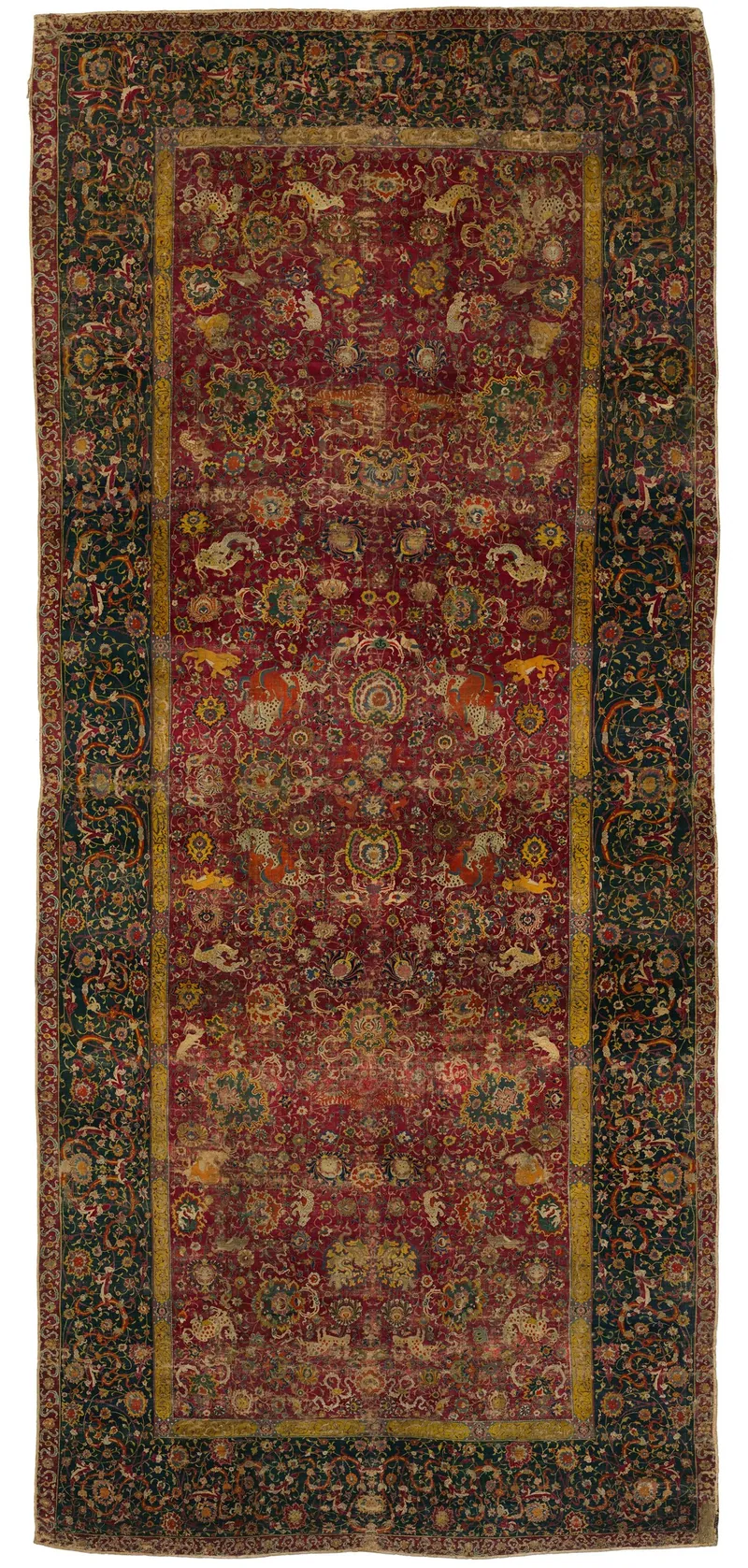
Among the historic masterpieces of the Persian rug that now grace the world's great museums, the Emperor's Carpet holds a special place. Woven in the second half of the sixteenth century under the Safavids, it is one of the finest examples of carpet weaving from Iran's royal workshops, and is now held in the Islamic Art collection of The Metropolitan Museum of Art in New York.
Nearly 7.6 metres long and 3.4 metres wide, it is a magnificent work in which Persian design, dyeing and weaving reach a rare harmony.
A garden of paradise in warp and weft
One of its defining features is the intricate, artful mix of plant and animal motifs. Across the field, scrolling stems, blossoms, large leaves, arabesques and cloud bands sit side by side.
Among them appear lions, tigers, leopards, buffalo, birds and mythical creatures such as dragons. With the remarkable order of the plant forms, they create a dreamlike world, as if the Persian artist had set a whole world of life, movement and beauty upon the carpet.
Persian poetry in the border of a world masterpiece
A precious feature of the carpet is a Persian inscription in its inner border, taken from the poems of Zahir al-Din Faryabi, the celebrated twelfth-century Iranian poet. The verses speak of spring, green nature and the beauty of the garden, a poetic link between carpet weaving and classical Persian literature.
So the Emperor's Carpet is not only a brilliant work of Persian textile art but also a meeting of Persian poetry, painting and culture.
From Safavid workshops to the residences of European emperors
The name comes from the carpet's history in European royal collections. According to the Met, it once adorned the summer residence of the Habsburg emperors.
Some historical accounts say that this carpet and its pair were given by Peter the Great, Tsar of Russia, to Leopold I in the late seventeenth century, although this has not been proven.
The carpet entered the collection of The Metropolitan Museum of Art in 1943 and is today one of the treasures of its Islamic Art department.
Finesse beyond time
The Emperor's Carpet has a silk warp and weft and a wool pile. Its asymmetric knot, fine materials and highly complex design show the great skill of Safavid weavers.
More than four centuries after it was made, the Emperor's Carpet remains proof of the Persian rug's exceptional place in world art history, a reminder that a handmade Persian rug is far more than a useful object: it carries the history, culture, creativity and artistic identity of Iran.
Details of the Emperor's Carpet
Name: The Emperor's Carpet
Period: Safavid, second half of the 16th century
Origin: Iran; the city of weaving is not known for certain
Size: 759.5 × 339.1 cm (about 25.8 m²)
Recorded weight: 65.3 kg, stored on a roll
Warp and weft: silk
Pile: wool
Knot: asymmetric (Persian)
Accession number: 43.121.1
Entered the collection: 1943
On view: Gallery 462, The Metropolitan Museum of Art, New York
Source: the official page of the Emperor's Carpet at The Metropolitan Museum of Art, metmuseum.org/art/collection/search/450509
Photos: The Metropolitan Museum of Art, New York, Rogers Fund, 1943 (public domain, the museum's Open Access programme).
Mais
 Conhecimento sobre tapetes · 2026-11-12
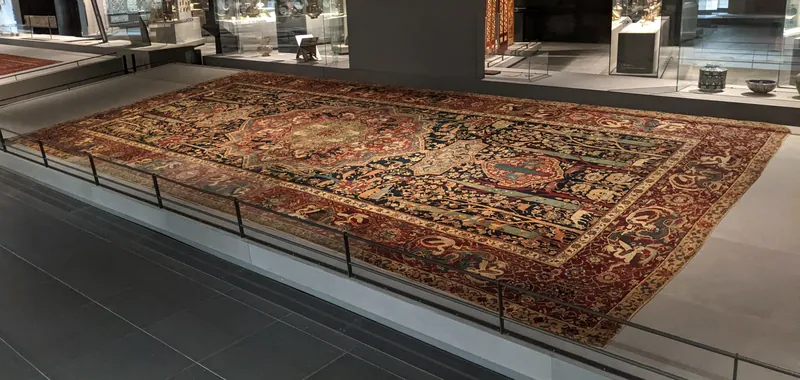
The Mantes Carpet is one of the finest surviving examples of Persian carpet weaving from the Safavid era: a masterpiece almost five centuries old, now held in the Islamic Art collection of the Louvre in Paris. Nearly eight metres long and four metres wide, it presents a remarkable picture of nature, Persian gardens, mythical beasts and the matchless skill of Iranian weavers of the sixteenth century.
According to the Louvre's official record, it was woven between 1530 and 1550, under Safavid rule, probably in north-western Iran. With its intricate mix of plant and animal motifs, its rich colours and the artful design of its central medallion, the Mantes Carpet holds a special place in the history of the Persian rug.
A garden of paradise in warp and weft
One of the carpet's outstanding features is its wide, detailed imagery. At its centre is a star-shaped medallion in which a simurgh, a dragon and four leopards are set in lively motion.
Around the medallion, hunting scenes, birds, animals, trees and many kinds of flowers fill the field. Beyond decoration, they recall the Persian garden and symbolic visions of paradise.
Red, navy and green sit in striking harmony with shades of cream and gold. The influence of Persian pictorial traditions, and of some East Asian elements, can be seen in the mythical beasts and the composition.
From a French church to the Louvre
The name comes from the town of Mantes-la-Jolie near Paris. The carpet was kept for years in the historic church of Notre-Dame de Mantes, and became known by its name.
How it travelled from Iran to France is not known, but museum records show that it was bought from Mantes in 1912 and entered the Louvre collection. It is an important example of Persian carpets in European churches and art collections, and a witness to the worldwide value of Iran's finest weavings.
Details of the Mantes Carpet
Name: Mantes Carpet
Period: Safavid
Woven: 1530–1550
Place: attributed to north-western Iran
Size: 780 × 390 cm
Pile: wool
Warp and weft: cotton
Knot: asymmetric (Persian)
Held at: Musée du Louvre, France
Inventory number: OA 6610
Entered the museum: 1912
A heritage of timeless Iranian art
The Mantes Carpet is not just a historic weaving; it is a precious record of how Persian painting, design and weaving came together. Its fine motifs and pictorial stories show that in the Safavid era a carpet was far more than a floor covering: it was a work of art with a cultural and historical identity.
Its place in one of the world's great museums is a reminder that the handmade Persian rug is part of humanity's artistic heritage, still inspiring artists, scholars and art lovers around the world after centuries.
Source: the Louvre's official record of the Mantes Carpet (OA 6610), collections.louvre.fr
Photos from Wikimedia Commons, freely licensed: full view by Shonagon (CC0); hall view by PersianDutchNetwork (public domain); border detail by Jastrow (public domain).
Mais
 Conhecimento sobre tapetes · 2026-11-12
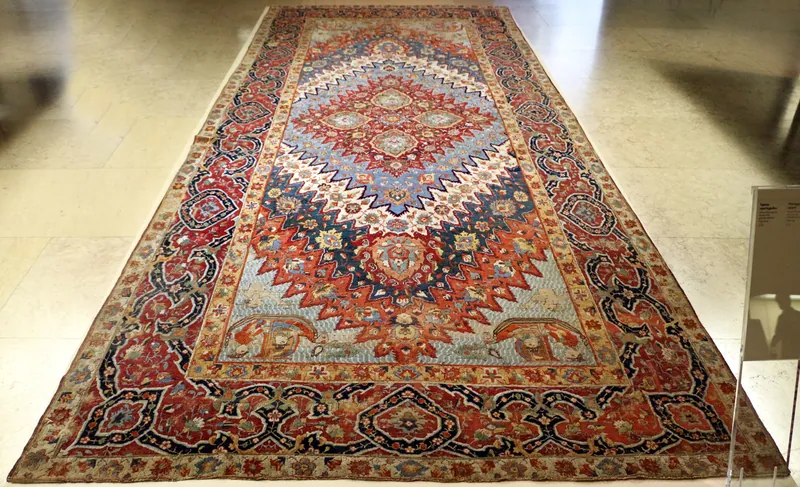
The "Sea Wave" carpet, also known as the "Portuguese Carpet", is one of the most remarkable and unusual works in the history of Eastern carpet weaving. Woven in the early seventeenth century, in the Safavid era, it carries ships, sailors and rolling waves in its warp and weft: a rare story of textile art meeting the history of seafaring and world trade.
The carpet is now held in the collection of the MAK – Museum of Applied Arts in Vienna, Austria. Where most classical carpets rely on flowers, hunting scenes or geometric designs, the Sea Wave carpet earned its special place through its sea scenes.
The story of a carpet: from Eastern patterns to Portuguese ships
In the Safavid period, growing trade between Iran, India and Europe, Portugal above all, opened the way for an exchange of goods, ideas and artistic styles. Fine Eastern carpets were among the goods most prized by European merchants and nobles.
The Sea Wave carpet reflects that world. Sailing ships, seafarers in European dress and sea creatures alongside traditional ornament bring together two different visual worlds.
The name "Portuguese Carpet" comes from these features. Scholars believe this group of carpets may have been woven for Portuguese clients or to their taste, although who first ordered this piece is not known for certain.
The architecture of the design: a sea flowing across the carpet
At the centre lies a large medallion covered with plants, flowers and fine ornament. Around it, layers of broken, serrated shapes in different colours suggest wave after wave.
Shades of blue, from deep to light, give the water depth and movement. At both ends of the carpet are scenes of sailing ships and European travellers, completed by sea creatures and human figures. Here the sea is not just decoration; it is part of the carpet's story.
Details of the Sea Wave carpet (from the MAK Vienna catalogue record)
Name: So-called Portuguese Carpet
Period: early 17th century, Safavid era
Place of weaving in the museum record: Greater Khorasan
Weaver: unknown
Size: 680 × 313 cm (about 21.3 m²)
Warp and weft: cotton
Pile: wool
Knot: asymmetric (Persian)
Held at: MAK – Museum of Applied Arts, Vienna, Austria
Inventory number: T 8339
Why the Sea Wave carpet matters
Its importance is not only its four centuries or its size. It shows how carpet weaving could go beyond familiar patterns to tell the story of cultural and trade links between distant lands. In many classical carpets nature appears as a garden, a flower bed or a hunting ground; in the Sea Wave carpet it appears as a stormy sea.
It is also an important example for studying how international markets shaped the design of fine textiles. European elements beside Eastern motifs show that the designers and weavers of the time knew the taste and culture of far-off buyers.
The Sea Wave carpet at the 2026 Vienna exhibition
The carpet was shown in the MAK exhibition "GLANZSTÜCKE", from 10 June to 27 September 2026, alongside jewellery by Van Cleef & Arpels. In the section on travel, the Portuguese Carpet was placed next to a model of a historic sailing ship, highlighting the role of travel, seafaring and cultural exchange in the decorative arts.
Closing
The Sea Wave carpet is more than a historic weaving: in it, weaving skill, artistic imagination and the memory of sea voyages come together. More than four centuries on, it remains one of the finest examples of sea imagery in the history of carpet art, a heritage in which every knot tells part of the history of culture and art.
Source: the MAK – Museum of Applied Arts, Vienna, catalogue record of the So-called Portuguese Carpet (inv. no. T 8339). See photographs of the carpet on the museum page: sammlung.mak.at/en/collect/so-called-portuguese-carpet_98332
About the photos: the photographs of the Vienna carpet are not openly licensed, so the photos on this page show a sister carpet of the same "Portuguese" group, with the same ships and waves, in the Calouste Gulbenkian Museum, Lisbon. Photos by Sailko on Wikimedia Commons, CC BY 3.0.
Mais
 Notícias · 2026-11-12
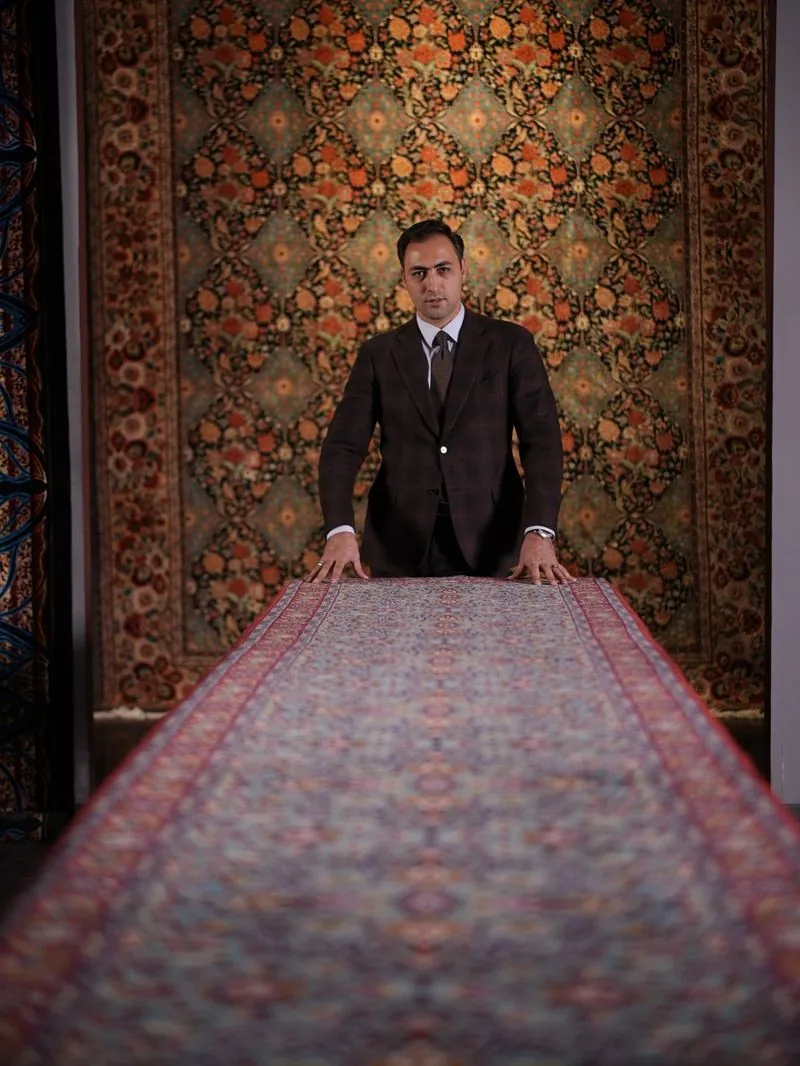
Farshkadeh Azarakhsh, one of the leading houses for handmade Persian rugs, holds a special place in presenting this authentic Iranian art, with a wide collection of fine and antique rugs and works by Iran's master weavers.
The gallery sits in Iran Mall, Tehran, and aims to be more than a shop: a place where rug lovers, collectors and buyers can experience the art, history and culture of Iran.
A treasury of Iranian art and history
At Farshkadeh Azarakhsh, a rug is never just a decorative object; every handwoven piece tells a story of the culture, creativity and skill of generations of Iranian artists.
From the fine rugs of Tabriz, Isfahan, Qom and Kashan to treasured works from Kerman, Nain and other renowned weaving centres, the collection shows the many faces of the handmade rug.
Silk rugs, kurk-and-silk pieces, antiques, historic designs and grand-scale weavings are among the highlights of the collection.
Rare masterpieces of weaving
Farshkadeh Azarakhsh is known for pieces of striking size, exceptional fineness and high artistic value.
Grand-scale rugs with intricate patterns, works attributed to celebrated masters and antique pieces several decades old are all part of the collection.
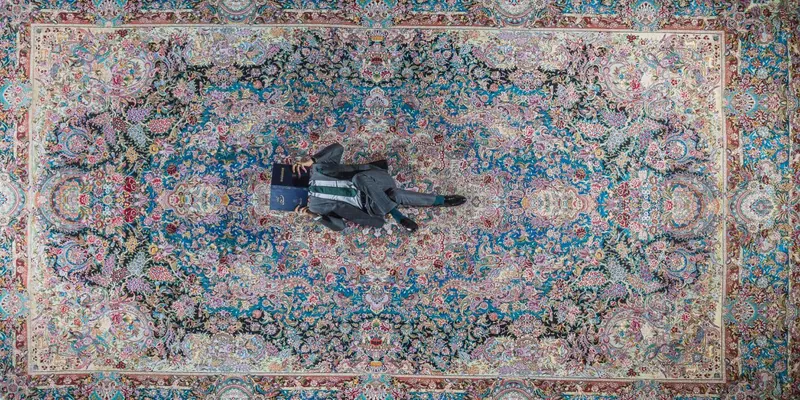
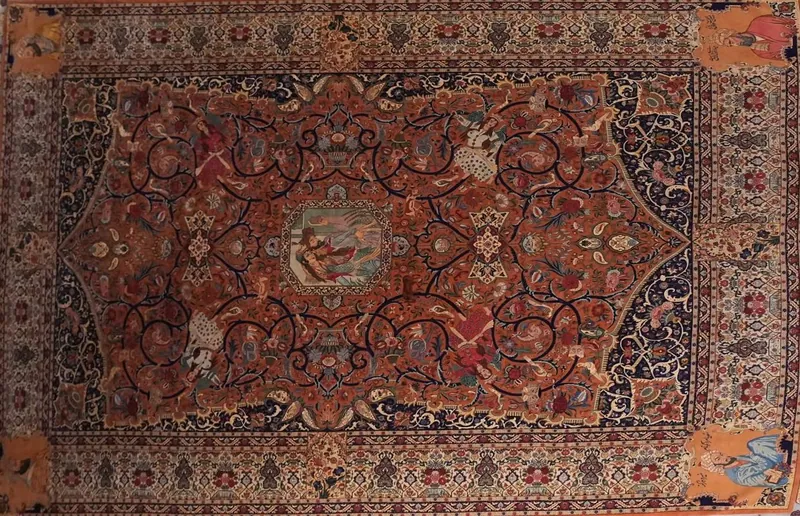
Among them, the 30-square-metre "Golestan" rug designed by Master Najafzadeh stands out as a remarkable example of creativity in Persian weaving: no motif in its design is repeated, and every part of the rug has a visual identity of its own.
A bridge between Persian art and the world
The handmade Persian rug has long been one of the best-known symbols of Iranian art and culture around the world.
By presenting a collection of distinguished handwoven pieces, Farshkadeh Azarakhsh works to introduce this precious heritage to admirers in Iran and abroad.
While keeping the craft authentic, the gallery hopes to open the artistic, historical and cultural values of the Persian rug to a new generation and to audiences worldwide.
Farshkadeh Azarakhsh: more than a rug gallery
What sets Farshkadeh Azarakhsh apart is not only the variety of its rugs but an artist's eye in choosing and presenting works, each of which can tell a part of the history of Iranian art.
A visit to Farshkadeh Azarakhsh is a chance to see an art handed down from generation to generation over centuries, and still one of the most precious expressions of Iranian culture today.
Farshkadeh Azarakhsh, in Iran Mall, Tehran, welcomes everyone who loves the authentic art of the handmade Persian rug.
Mais
 Notícias · 2026-11-02
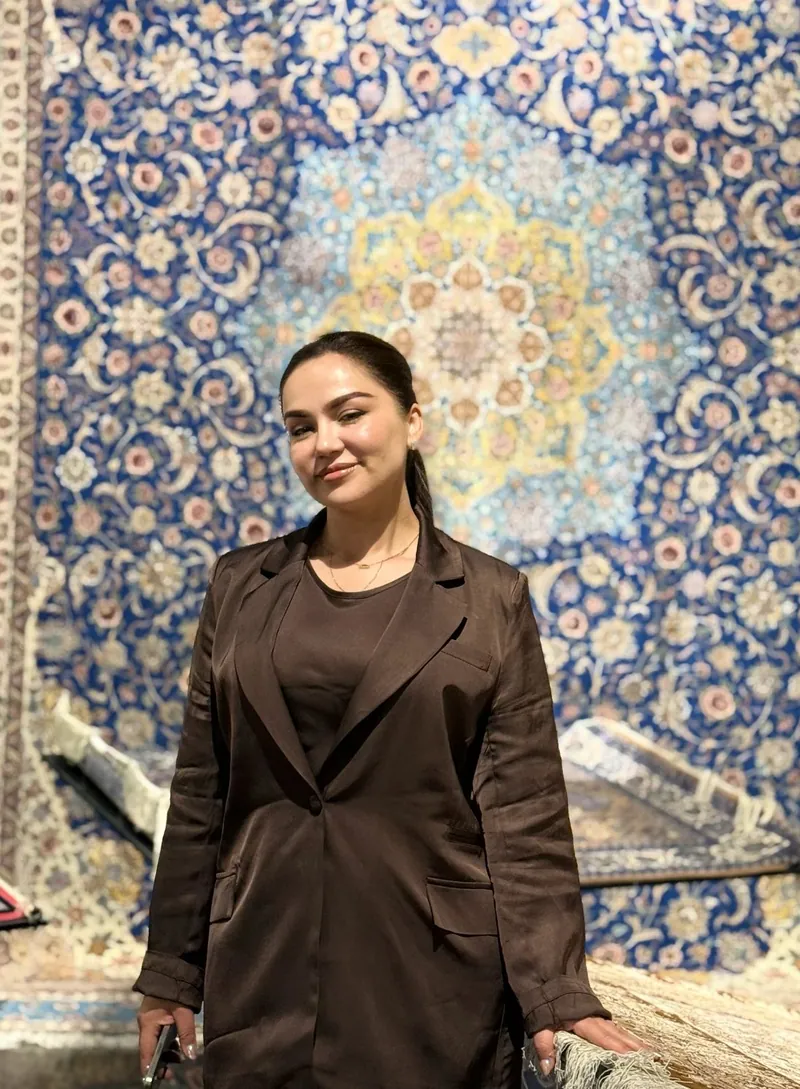
The celebrated Tajik singer Nigina Amonqulova was a guest of Farshkadeh Azarakhsh during her visit to Iran, where she saw handmade Persian rugs up close.
Born in Panjakent, Tajikistan, in 1986, she began her professional career in the late 2000s. She is known for Persian-language songs and traditional music, often performed in traditional dress. Last year, after a concert with Vahid Taj, she became better known among Iranian audiences and travelled to Iran.
During the visit, she and her companions viewed the gallery's rugs and pictorial rugs and talked about their designs.
The Persian language and its arts link Iran and Tajikistan. Just as Persian song crosses borders, the Persian rug speaks a language familiar to everyone who shares that culture.
Farshkadeh Azarakhsh thanks Nigina Amonqulova and her companions for their warm visit.
Mais
 Eventos · 2026-11-02
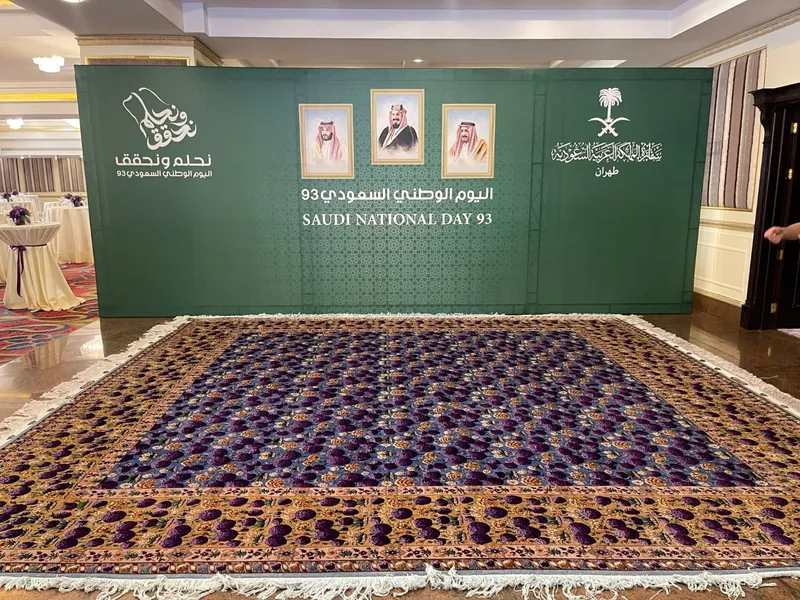
Farshkadeh Azarakhsh was invited to the private reception given by the Ambassador of the Kingdom of Saudi Arabia in Tehran for the 93rd Saudi National Day. Held at the Espinas Hotel, it brought guests from Iran and Saudi Arabia together.
Saudi National Day is marked each year on 23 September. The theme of the 93rd anniversary was "We dream and we achieve", shown on the backdrop of the event.
The flags of both countries stood beside the podium, and the hall was dressed with purple flowers and green flags. Guests in traditional dress joined a ceremonial dance as the Saudi flag was raised among them.
For Farshkadeh, the invitation was a valued occasion for conversation in a cultural setting. The handmade Persian rug has long been a shared language between peoples.
Farshkadeh thanks the Ambassador and Embassy of the Kingdom of Saudi Arabia in Tehran for the invitation.
Mais
 Conhecimento sobre tapetes · 2026-11-02
The Baharestan Carpet, also known as the Spring of Khosrow, is one of the most legendary carpets in history. It was kept in the Sasanian royal palace at Ctesiphon. Nothing of it survives: all we know comes from the historians.
It is usually linked to Khosrow II. The Encyclopaedia Iranica describes a huge royal carpet of the late Sasanian period, and notes that the sources give it several names, including "the Spring of Khosrow" and "the Winter Carpet". They say the king sat on it in winter, so that the cold months felt like spring.
Its design is described as a garden in spring, with streams, paths, trees and flowers, worked in gold, silver, silk and precious stones, with a border of emeralds. That makes it one of the earliest recorded examples of the garden design in Persian carpets.
Accounts of its size differ. Some sources describe a square of about 27 metres a side, and others give different figures.
Its fate was tied to the end of the Sasanians. In AD 637 Muslim forces under Sa'd ibn Abi Waqqas took Ctesiphon and the carpet was seized. It was sent to Medina and, according to the historical accounts, cut into pieces and shared out.
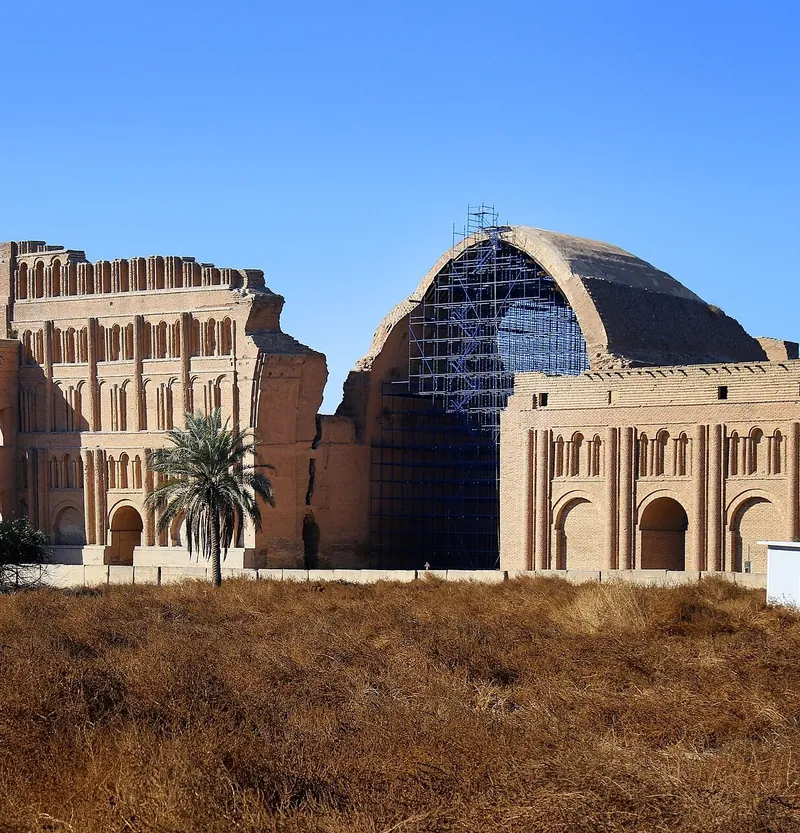
Not a fragment survives and no image of it exists. The great arch of Ctesiphon, Taq Kasra, in today's Iraq is the tangible link to that palace.
Mais
 Conhecimento sobre tapetes · 2026-11-02
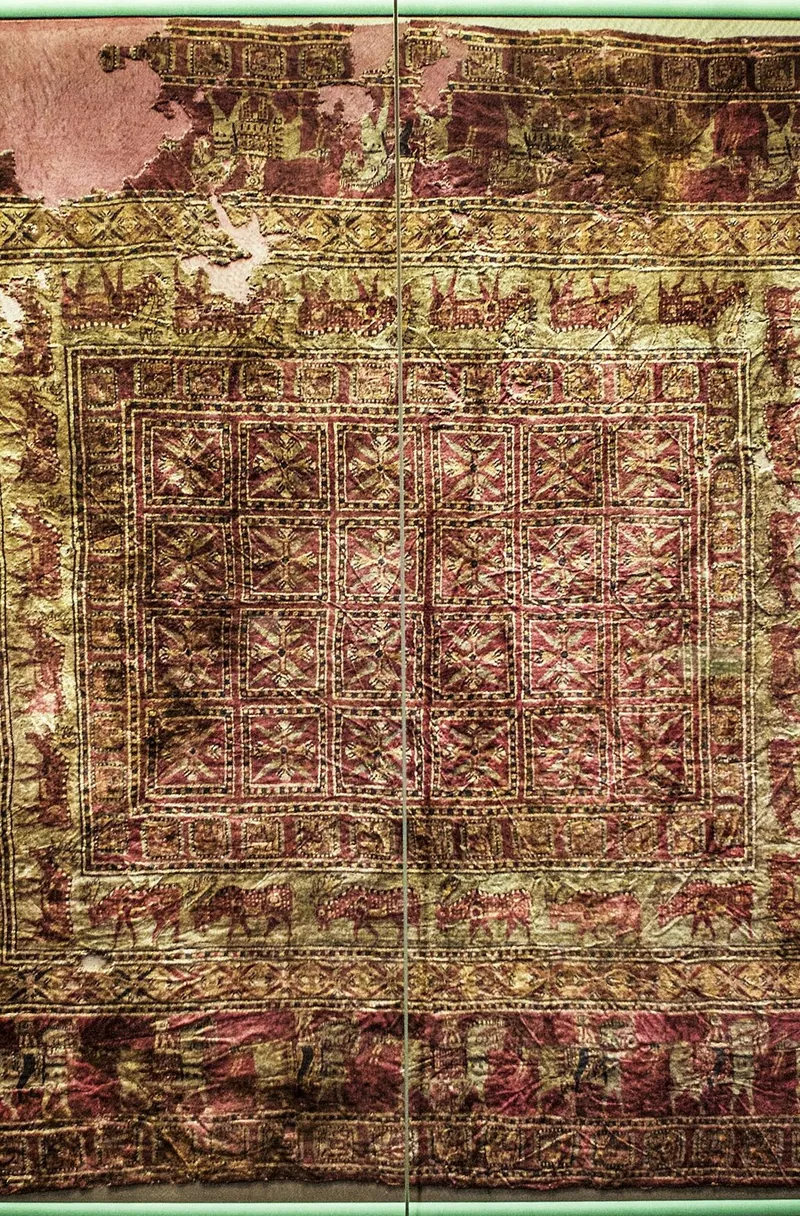
The Pazyryk Carpet is the oldest known pile carpet in the world. Woven around the fifth to fourth century BC, it is now at the Hermitage Museum in St Petersburg.
In 1949 the Russian archaeologist Sergei Rudenko excavated a Scythian noble's tomb in the Pazyryk Valley in the Altai Mountains of Siberia, where he found the carpet.
What saved it was an accident. Robbers had broken into the tomb in antiquity. Water then entered and froze, and the tomb stayed locked in ice. The steady cold preserved wool and colour for some 2,500 years.
The carpet measures about 183 by 200 centimetres, tied in symmetrical knots at around 36 knots per square centimetre. Such fineness suggests that the craft was already long established.
Its design has a field of repeating squares, framed by a border of deer and another of horsemen and horses.
Its origin remains unresolved. Rudenko and many later scholars attributed it to Achaemenid Persia because its motifs resemble the art of Persepolis; others have proposed Mesopotamia or Armenia.
Mais
 Conhecimento sobre tapetes · 2026-11-02
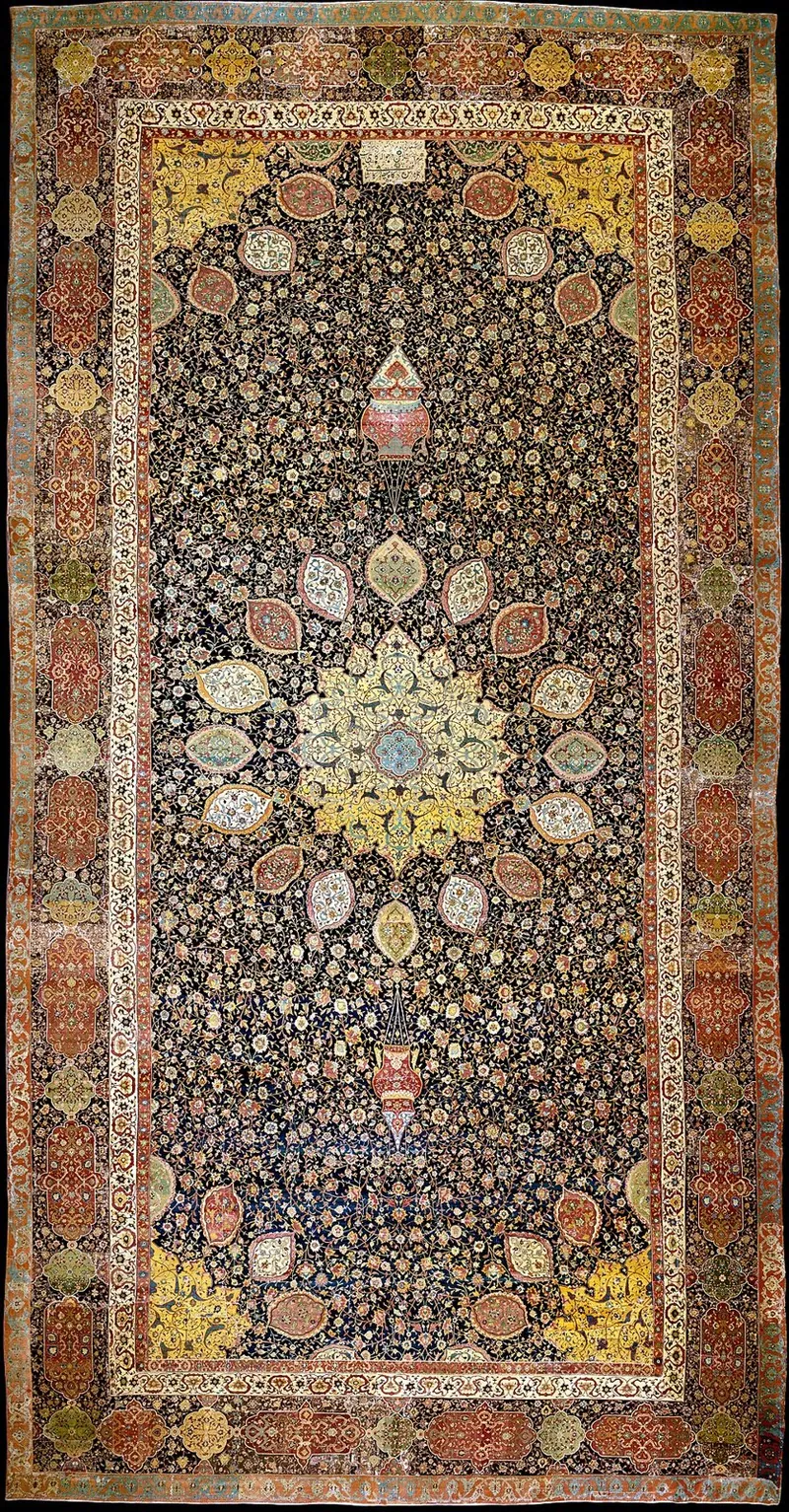
The Ardabil Carpet is one of the most famous carpets in the world. Dated 946 AH (1539–40), it was woven in the reign of Shah Tahmasp of the Safavid dynasty and is the oldest large carpet to bear its own date. It is now at the Victoria and Albert Museum in London.
It was made for the shrine of Sheikh Safi al-Din at Ardabil, the revered ancestor of the Safavids. Where it was woven is not certain: Tabriz is often proposed, and Kashan, Isfahan and Kerman have been suggested too.
The London carpet measures about 10.5 by 5.3 metres, with a wool pile on a silk foundation and around 340 knots per square inch, some 25 million knots in all.
On a deep blue ground, a golden central medallion radiates among flowers and scrolling vines, with two hanging lamps on its axis. A cartouche at one end carries a couplet by Hafez, followed by the name Maqsud of Kashan and the date 946. The V&A notes that Maqsud was probably the court official in charge of the work, and that the phrase "slave of the threshold" expresses humility rather than actual slavery.
The carpet had a twin. In the nineteenth century both left Ardabil and reached Ziegler & Co. of Manchester, and parts of one, including its borders, were used to repair the other. The more complete carpet was sold to the V&A in 1893 for £2,000. Its smaller, borderless twin is at the Los Angeles County Museum of Art.
Mais
 Notícias · 2026-11-02
The Private Collection is a selection of Farshkadeh's rarest pieces, available only to members. Request membership to view it.
Mais
 Chamadas abertas · 2026-11-02
Farshkadeh plans an open photography call on the Persian rug. Entry and judging details will be published here once final.
Mais
 Eventos · 2026-11-02
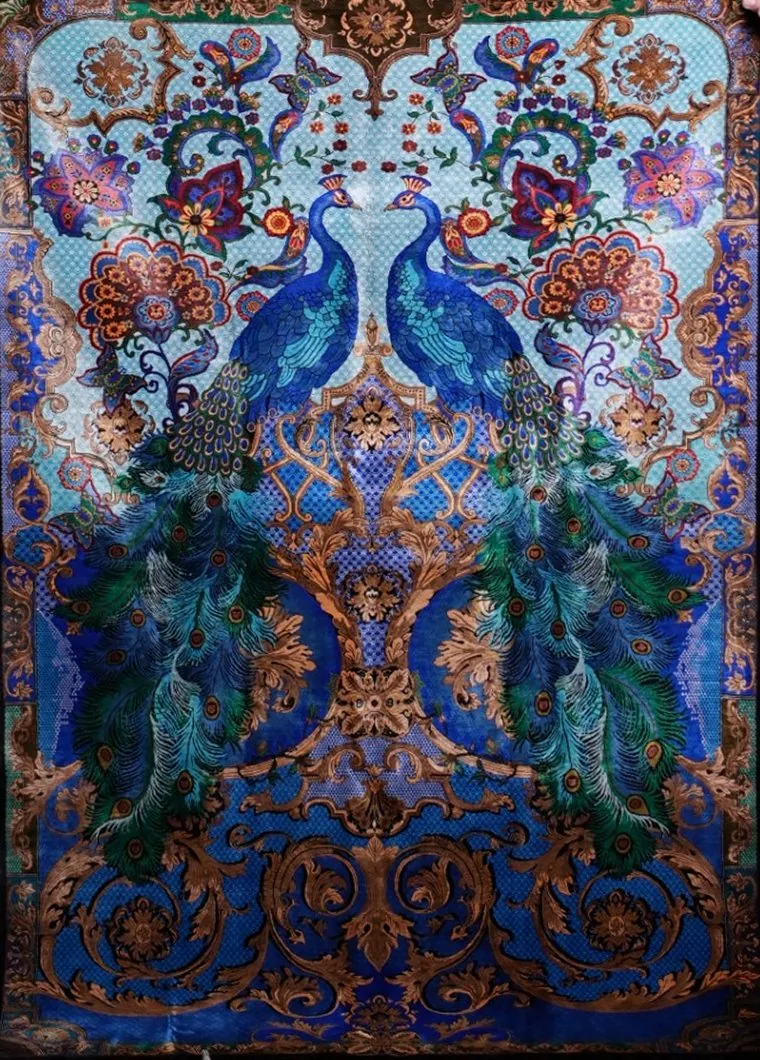
Farshkadeh offers rare pieces in public and private auctions. New dates are announced here and on the auctions page.
Mais
 Notícias · 2026-11-02
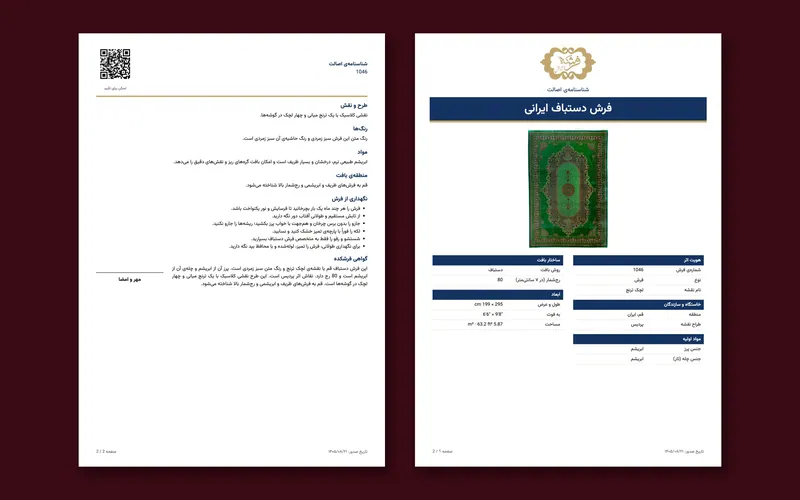
Every rug that reaches your home from Farshkadeh Azarakhsh has its own certificate of authenticity: a document that records the identity, origin, materials and features of that very rug, and stays with it for good. The picture at the top of this page is the real certificate of a rug from our treasury: a silk Qom rug with a medallion-and-corner design, number 1046.
Why a certificate matters
A handmade rug is a work of art that stays in a family for years, often for generations. Its certificate confirms its authenticity, supports its value over time, and gives you a trusted document for insurance, resale or passing it on.
What the Farshkadeh certificate records
The first page is the rug's portrait: its photograph and a table of details in several parts.
Identity: rug number, type and design name.
Origin and makers: weaving region and design artist.
Materials: pile and warp.
Structure: weaving method (handmade) and knot density per 7 cm (raj).
Dimensions: length and width in centimetres and feet, and area in square metres and square feet.
The second page tells the rug's story:
Design, colours, materials and weaving region, each in a few clear sentences.
Care guidance, so your rug stays beautiful for years.
The Farshkadeh statement confirming the rug's details, with space for stamp and signature and the date of issue.
The QR code: authenticity in one scan
A QR code is printed at the top of the second page and on every rug's label. Scan it with your phone camera and the online page of that rug opens on the Farshkadeh website, so you can see that the certificate in your hand matches our record. Each rug has its own code, which cannot be guessed.
For the owner: a private record
The online certificate page shows the rug's details to everyone, but the purchase details and service history, such as washing and restoration at Farshkadeh, are shown only with the owner's private PIN or when the owner is signed in. Your private information stays private.
Two languages, print and digital
The certificate is prepared in Persian and English, both as a printed document and as a PDF you can keep or send, ideal for clients who take a rug to another country or give it as a gift.
If you own a Farshkadeh rug and would like its certificate, or have a question about your rug's certificate, please contact our team at the galleries.
Mais
 Notícias · 2026-11-02
The handmade Persian rug has always been a traveller, from the caravans of the Silk Road to the palaces and great museums of the world. Farshkadeh Azarakhsh carries that old journey to your home today: wherever you are, the rug you choose is delivered to your door.
Three galleries, one worldwide network
Farshkadeh ships from three galleries, each a gateway to part of the world:
Tehran, Iran: the heart of the Farshkadeh treasury and closest to the weaving workshops; routes to Europe, Russia, Turkey, East Asia and North America.
Muscat, Oman: the gateway to the Persian Gulf countries, India, Southeast Asia, Australia and Africa.
São Paulo, Brazil: the gateway to South and Central America, with shorter routes to the United States, Portugal, Spain and West Africa.
The map at the top of this page shows that network: green routes from Iran, red from Oman and gold from Brazil, linking our galleries with cities from London, Paris and Berlin to Dubai, Singapore and Sydney, and from Buenos Aires and Mexico City to New York and Los Angeles.
From choosing to delivery
Choose: browse the online treasury or the Farshkadeh flip catalogue, with photos, size, material, knot density and a description of every rug. If you have something particular in mind, our team will help you find the right size, colours and design for your space.
Ask: before you buy, contact us on WhatsApp or call our galleries about any rug, and about the cost and timing of delivery to your country.
Packing: every rug is packed with care, suited to its material and size, so it arrives safe and sound.
Certificate: every rug travels with its Farshkadeh certificate of authenticity, recording its weaving region, materials, size and features.
Delivery to your door: the rug comes all the way to your home, and our team is there to answer your questions at every step.
Care after you buy
Our relationship does not end at delivery. Washing, restoration and care are lasting Farshkadeh services, so that the rug that reaches your home today stays with your family for generations.
For timing, cost and terms of delivery to your country, please contact our team in Tehran, Muscat or São Paulo.
Mais
 Conhecimento sobre tapetes · 2026-11-02
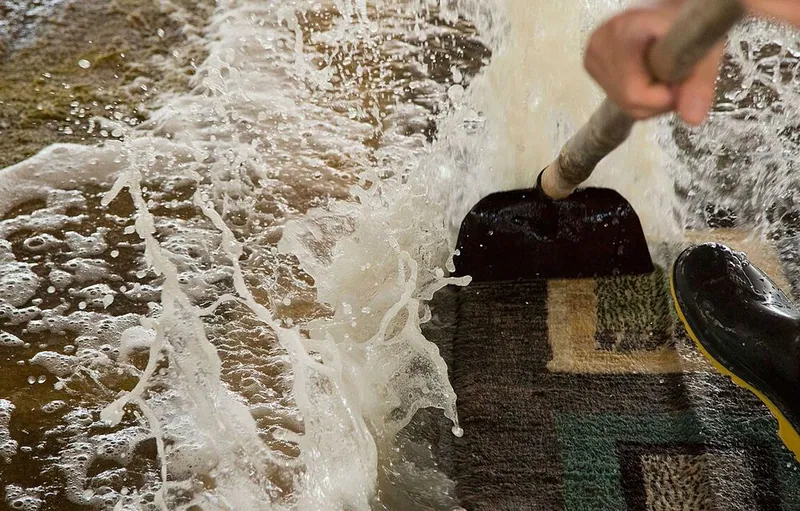
Keep the rug out of long, direct sun, and turn it every few months so that colour and wear stay even.
Vacuum in the direction of the pile and avoid the fringe. Blot spills at once with a clean cloth instead of rubbing. Leave washing and repairs to a specialist.
Mais
Conhecimento sobre tapetes · 2026-11-02
Wool is warm and hard-wearing, and suits busy rooms. Kurk comes from the finest wool fibres and gives a softer surface with more sheen.
Silk is lustrous and delicate. It allows the finest designs and is used mostly for pictorial and very finely knotted rugs.
Mais
 Conhecimento sobre tapetes · 2026-11-02
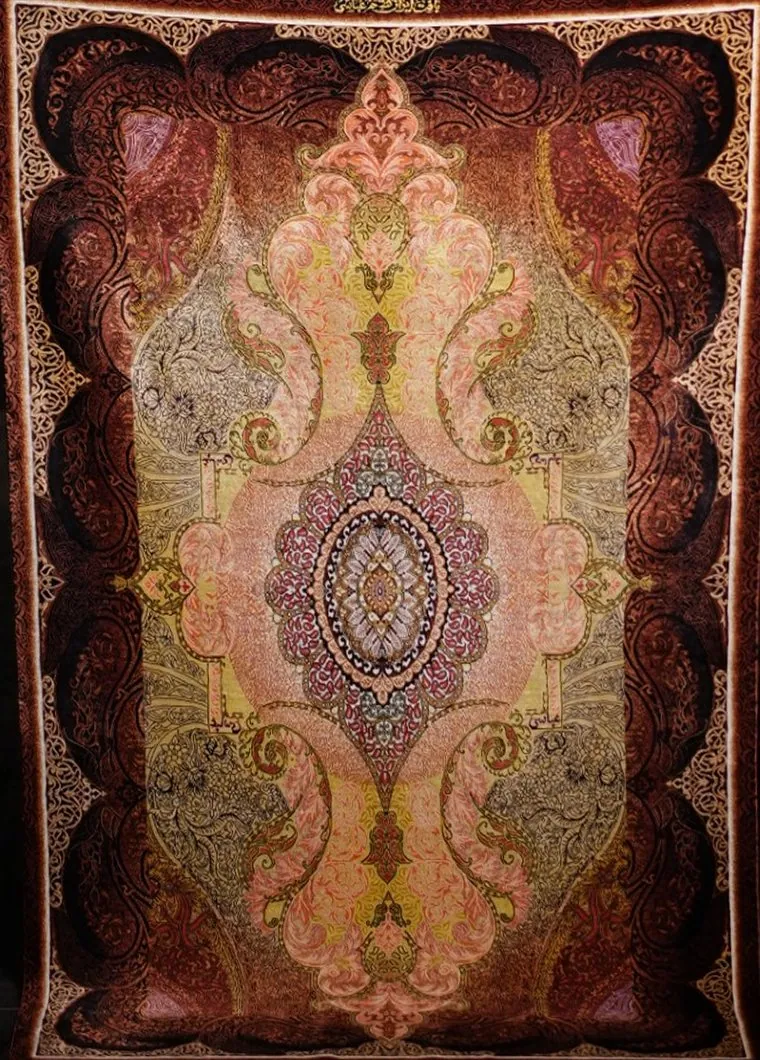
Raj is the number of knots along 7 cm of a rug's width. A 70 raj rug has 70 knots in every 7 cm, or about 100 knots per square centimetre.
The higher the raj, the finer the design and the longer the weaving takes. Raj alone does not set a rug's value, though: design, colour, materials and workmanship matter too.
Mais