A certificate for every rug
2026-11-02
Every Farshkadeh rug has its own certificate of authenticity. Scan the QR code on the label to open it.
2026-11-02
Every Farshkadeh rug has its own certificate of authenticity. Scan the QR code on the label to open it.
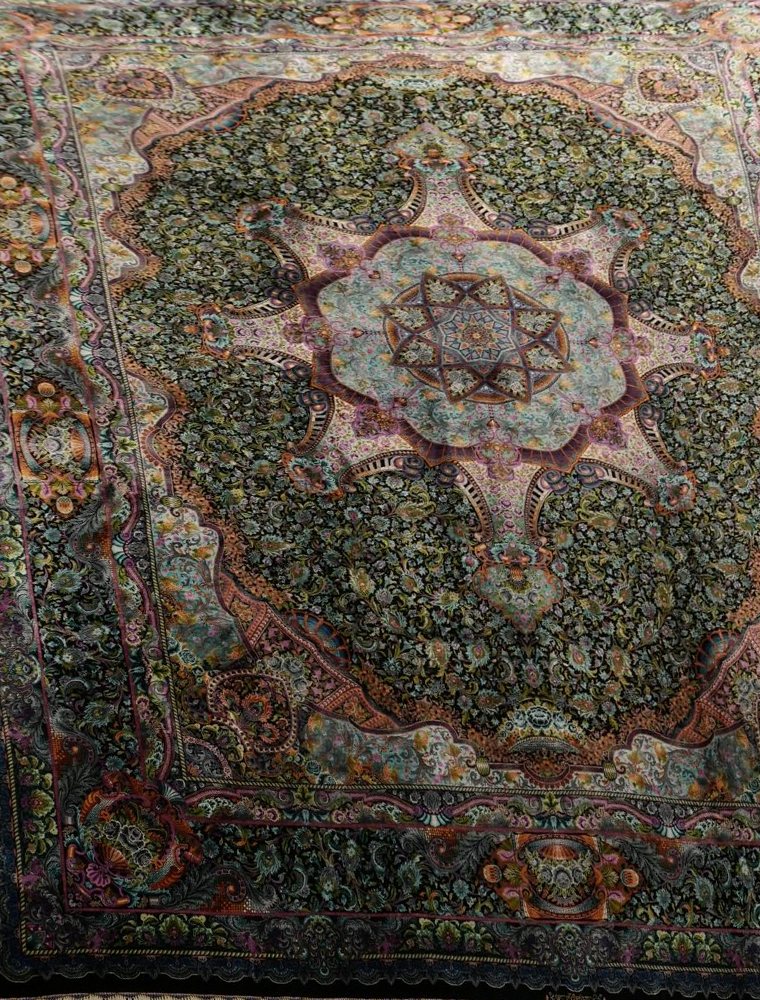
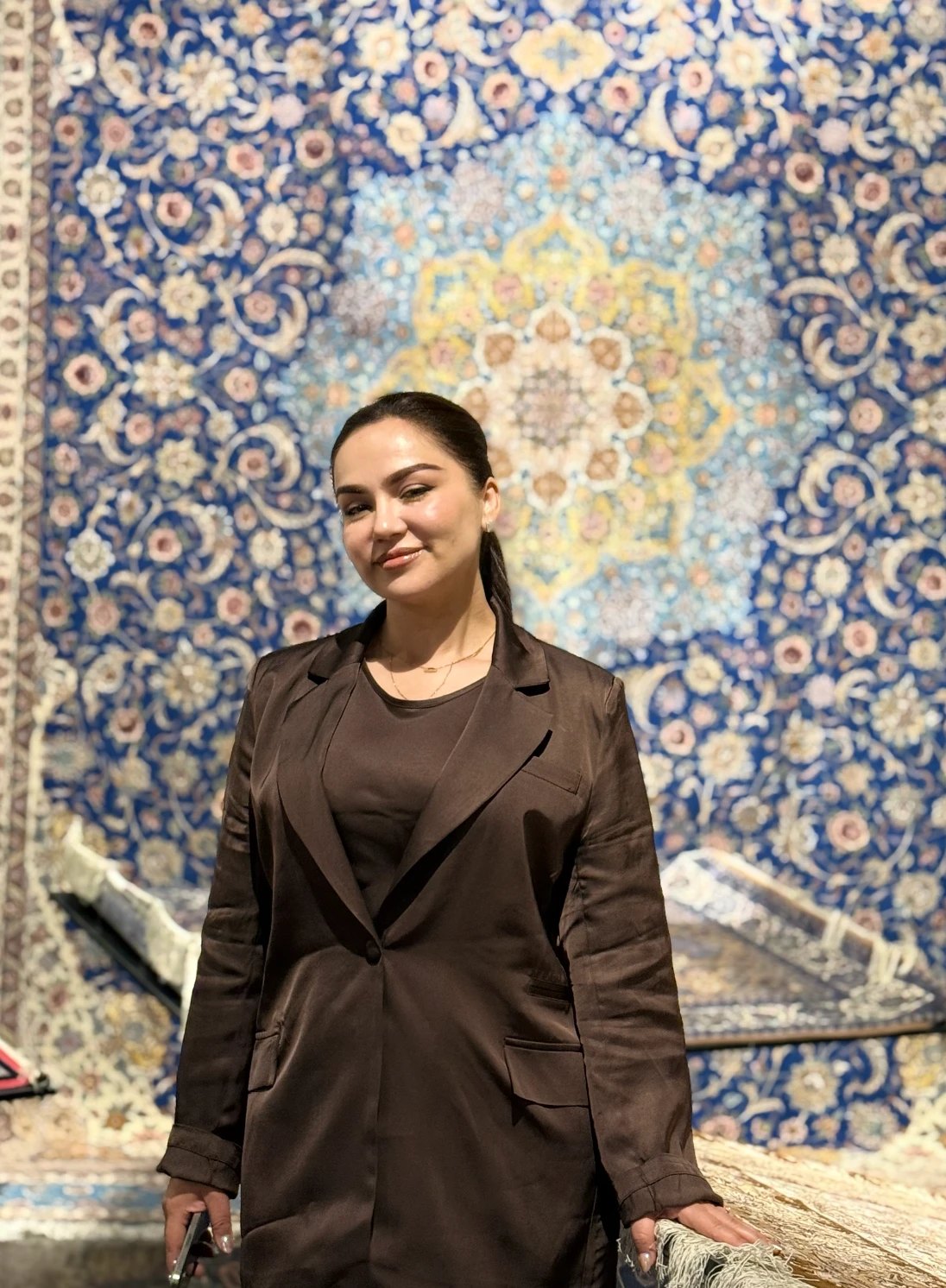
The celebrated Tajik singer Nigina Amonqulova was a guest of Farshkadeh Azarakhsh during her visit to Iran, where she saw handmade Persian rugs up close. Born in Panjakent, Tajikistan, in 1986, she began her professional career in the late 2000s. She is known for Persian-language songs and traditional music, often performed in traditional dress. Last year, after a concert with Vahid Taj, she became better known among Iranian audiences and travelled to Iran. During the visit, she and her companions viewed the gallery's rugs and pictorial rugs and talked about their designs. The Persian language and its arts link Iran and Tajikistan. Just as Persian song crosses borders, the Persian rug speaks a language familiar to everyone who shares that culture. Farshkadeh Azarakhsh thanks Nigina Amonqulova and her companions for their warm visit.
MoreThe Private Collection is a selection of Farshkadeh's rarest pieces, available only to members. Request membership to view it.
MoreFarshkadeh ships handmade rugs anywhere in the world, delivered to your door. For timing and terms in your country, please contact us.
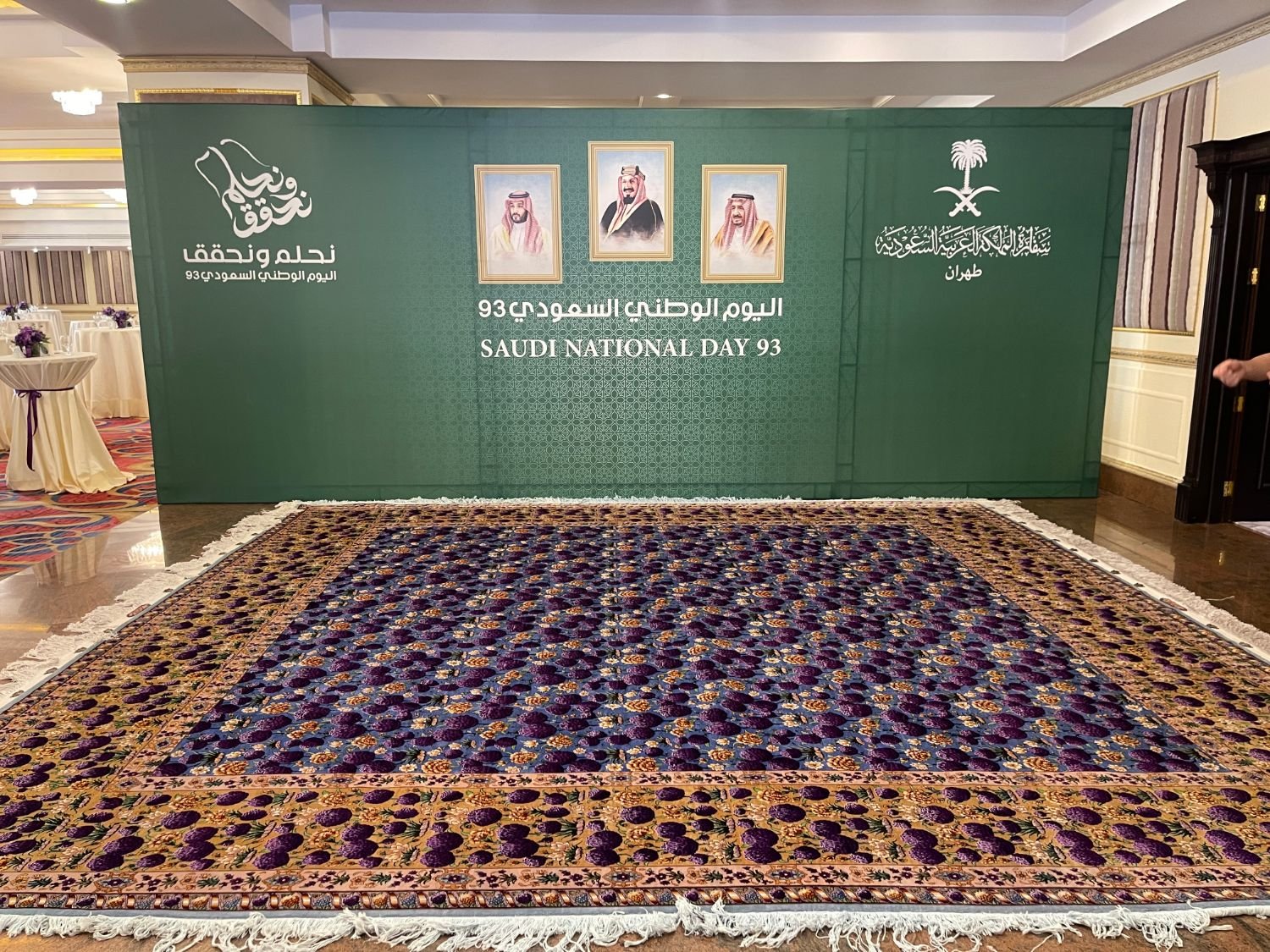
MoreFarshkadeh Azarakhsh was invited to the private reception given by the Ambassador of the Kingdom of Saudi Arabia in Tehran for the 93rd Saudi National Day. Held at the Espinas Hotel, it brought guests from Iran and Saudi Arabia together. Saudi National Day is marked each year on 23 September. The theme of the 93rd anniversary was "We dream and we achieve", shown on the backdrop of the event. The flags of both countries stood beside the podium, and the hall was dressed with purple flowers and green flags. Guests in traditional dress joined a ceremonial dance as the Saudi flag was raised among them. For Farshkadeh, the invitation was a valued occasion for conversation in a cultural setting. The handmade Persian rug has long been a shared language between peoples. Farshkadeh thanks the Ambassador and Embassy of the Kingdom of Saudi Arabia in Tehran for the invitation.
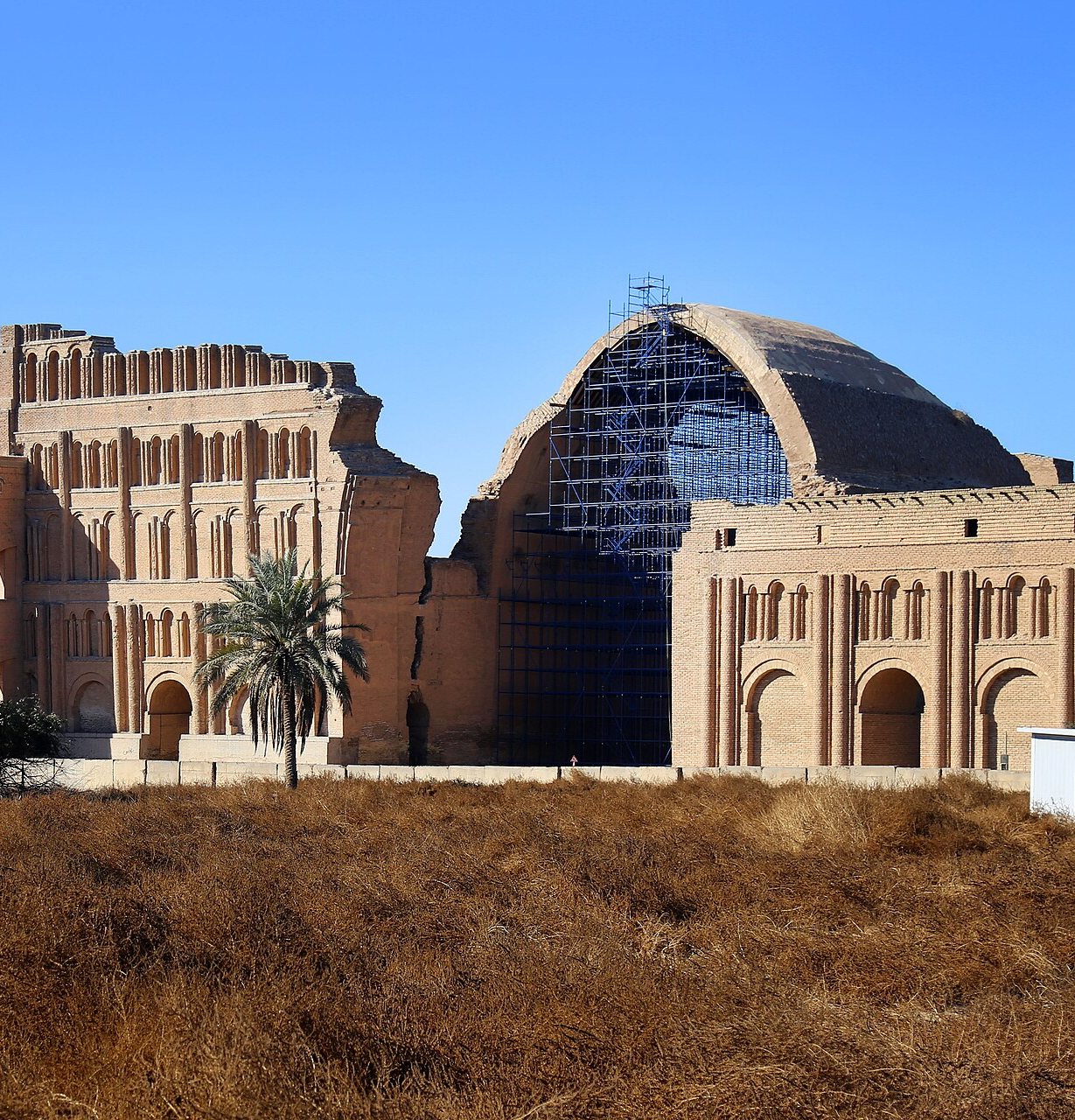
MoreThe Baharestan Carpet, also known as the Spring of Khosrow, is one of the most legendary carpets in history. It was kept in the Sasanian royal palace at Ctesiphon. Nothing of it survives: all we know comes from the historians. It is usually linked to Khosrow II. The Encyclopaedia Iranica describes a huge royal carpet of the late Sasanian period, and notes that the sources give it several names, including "the Spring of Khosrow" and "the Winter Carpet". They say the king sat on it in winter, so that the cold months felt like spring. Its design is described as a garden in spring, with streams, paths, trees and flowers, worked in gold, silver, silk and precious stones, with a border of emeralds. That makes it one of the earliest recorded examples of the garden design in Persian carpets. Accounts of its size differ. Some sources describe a square of about 27 metres a side, and others give different figures. Its fate was tied to the end of the Sasanians. In AD 637 Muslim forces under Sa'd ibn Abi Waqqas took Ctesiphon and the carpet was seized. It was sent to Medina and, according to the historical accounts, cut into pieces and shared out. Not a fragment survives and no image of it exists. The great arch of Ctesiphon, Taq Kasra, in today's Iraq is the tangible link to that palace.
More