The Pazyryk Carpet: the world's oldest carpet, found in ice
2026-11-02
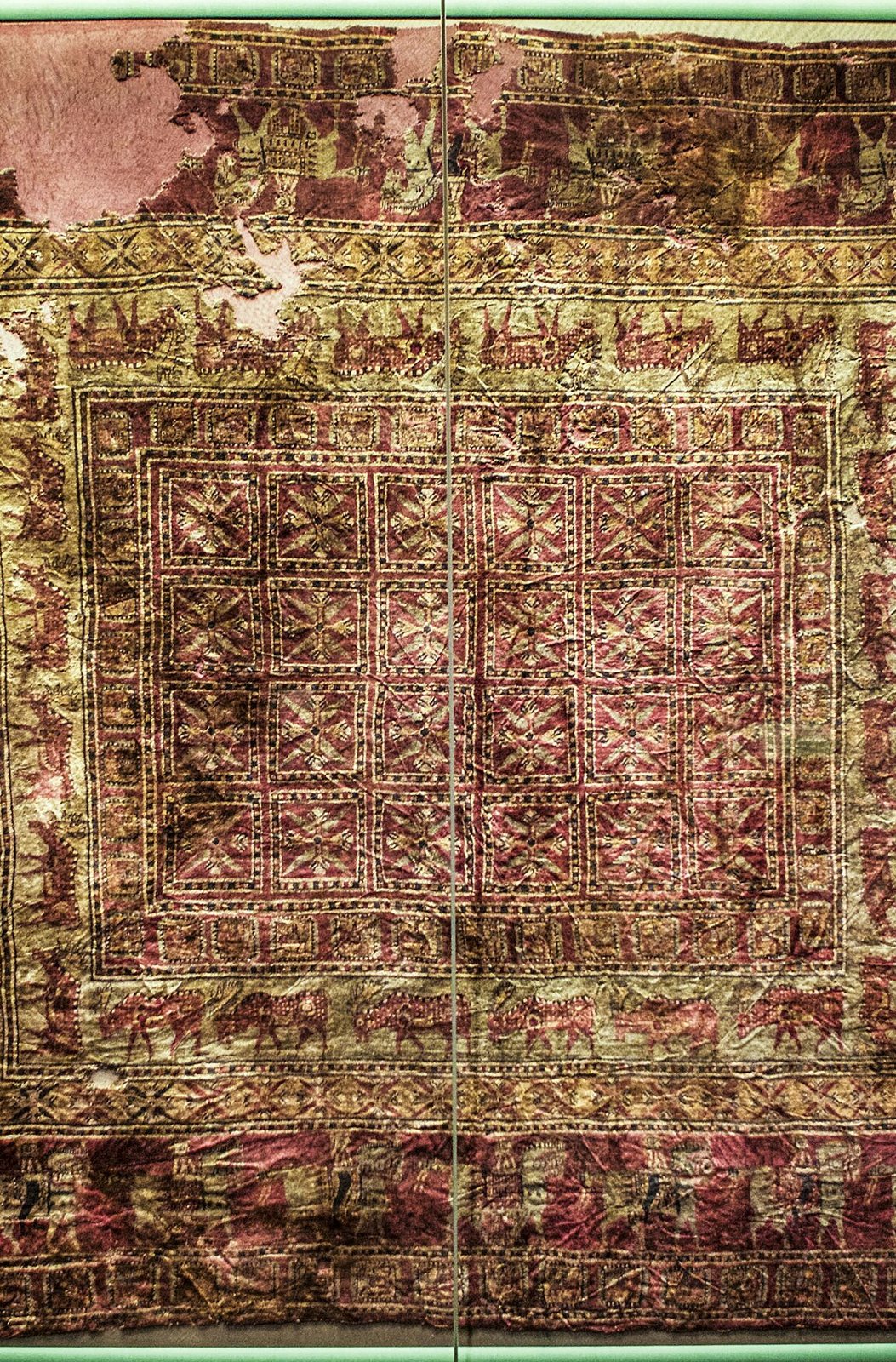
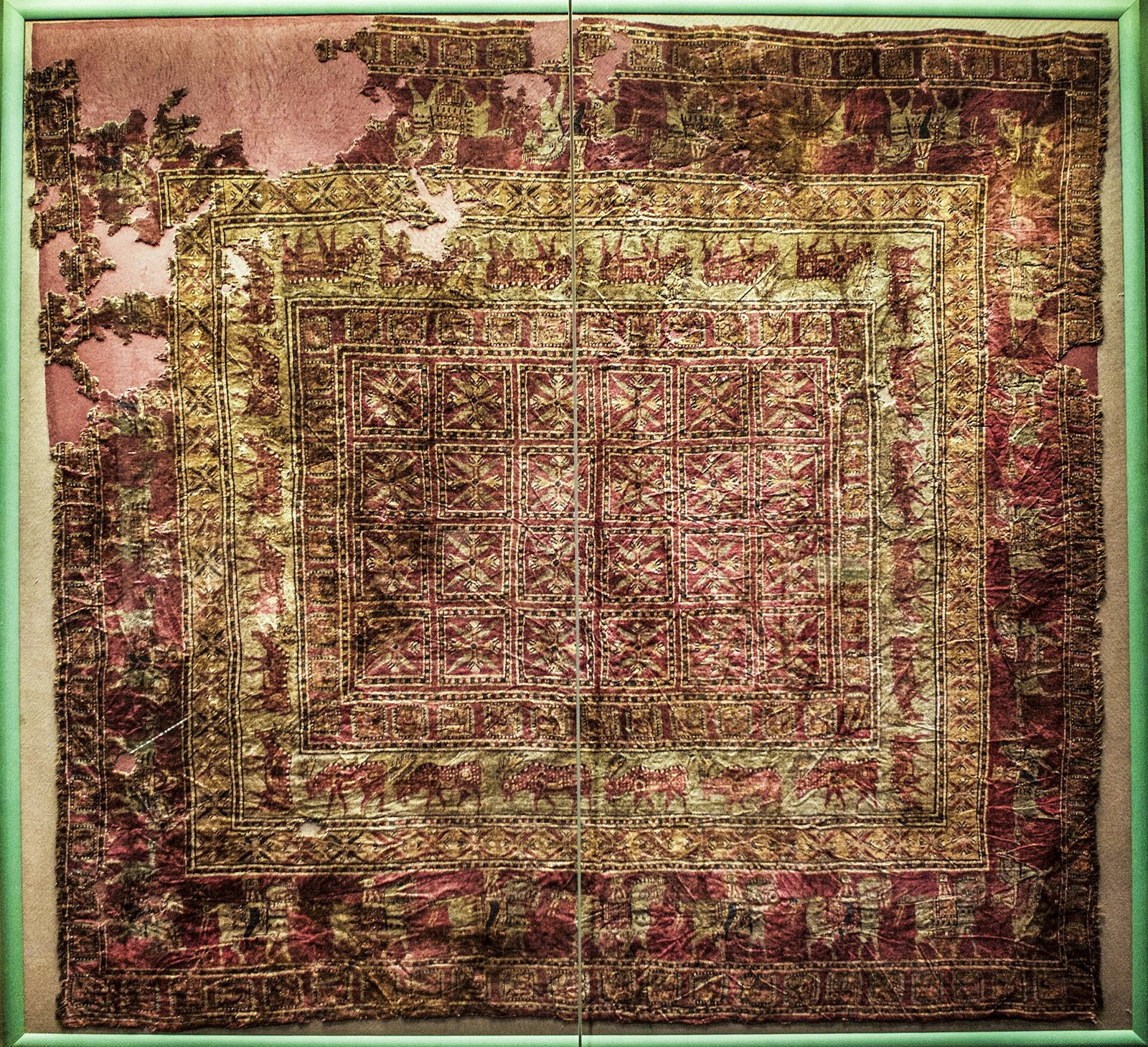
The Pazyryk Carpet is the oldest known pile carpet in the world. Woven around the fifth to fourth century BC, it is now at the Hermitage Museum in St Petersburg.
In 1949 the Russian archaeologist Sergei Rudenko excavated a Scythian noble's tomb in the Pazyryk Valley in the Altai Mountains of Siberia, where he found the carpet.
What saved it was an accident. Robbers had broken into the tomb in antiquity. Water then entered and froze, and the tomb stayed locked in ice. The steady cold preserved wool and colour for some 2,500 years.
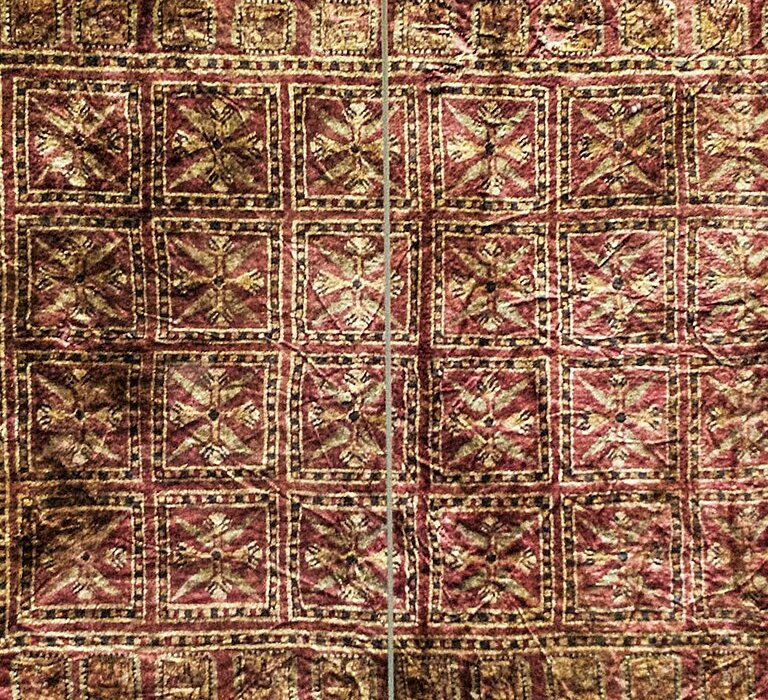
The carpet measures about 183 by 200 centimetres, tied in symmetrical knots at around 36 knots per square centimetre. Such fineness suggests that the craft was already long established.
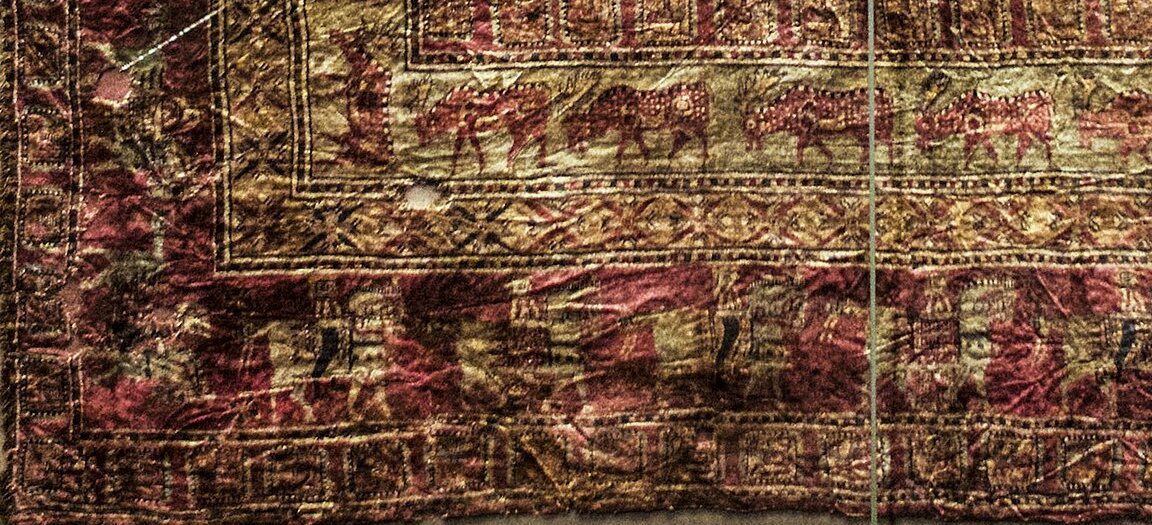
Its design has a field of repeating squares, framed by a border of deer and another of horsemen and horses.
Its origin remains unresolved. Rudenko and many later scholars attributed it to Achaemenid Persia because its motifs resemble the art of Persepolis; others have proposed Mesopotamia or Armenia.