The Sea Wave Carpet: a Safavid Masterpiece in the Vienna Museum
2026-11-12
The "Sea Wave" carpet, also known as the "Portuguese Carpet", is one of the most remarkable and unusual works in the history of Eastern carpet weaving. Woven in the early seventeenth century, in the Safavid era, it carries ships, sailors and rolling waves in its warp and weft: a rare story of textile art meeting the history of seafaring and world trade.
The carpet is now held in the collection of the MAK – Museum of Applied Arts in Vienna, Austria. Where most classical carpets rely on flowers, hunting scenes or geometric designs, the Sea Wave carpet earned its special place through its sea scenes.
The story of a carpet: from Eastern patterns to Portuguese ships
In the Safavid period, growing trade between Iran, India and Europe, Portugal above all, opened the way for an exchange of goods, ideas and artistic styles. Fine Eastern carpets were among the goods most prized by European merchants and nobles.
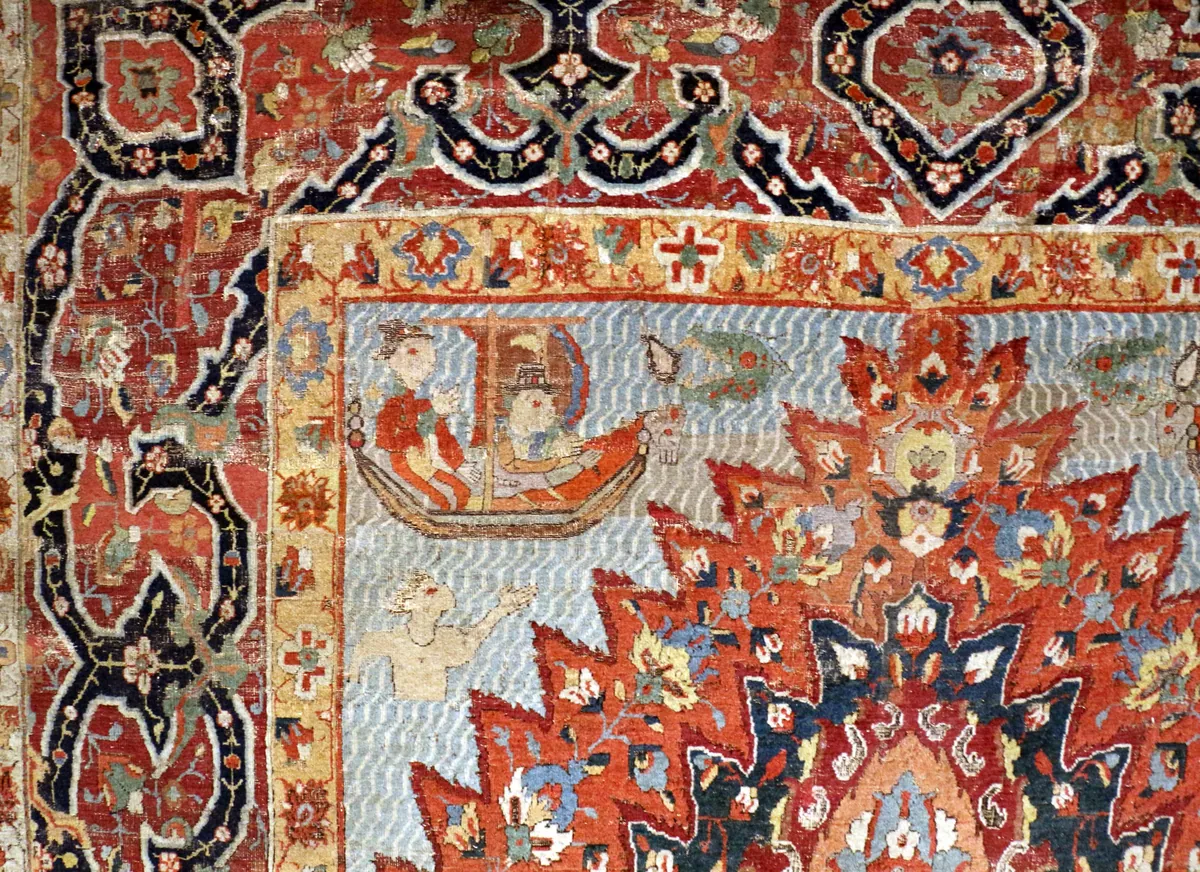
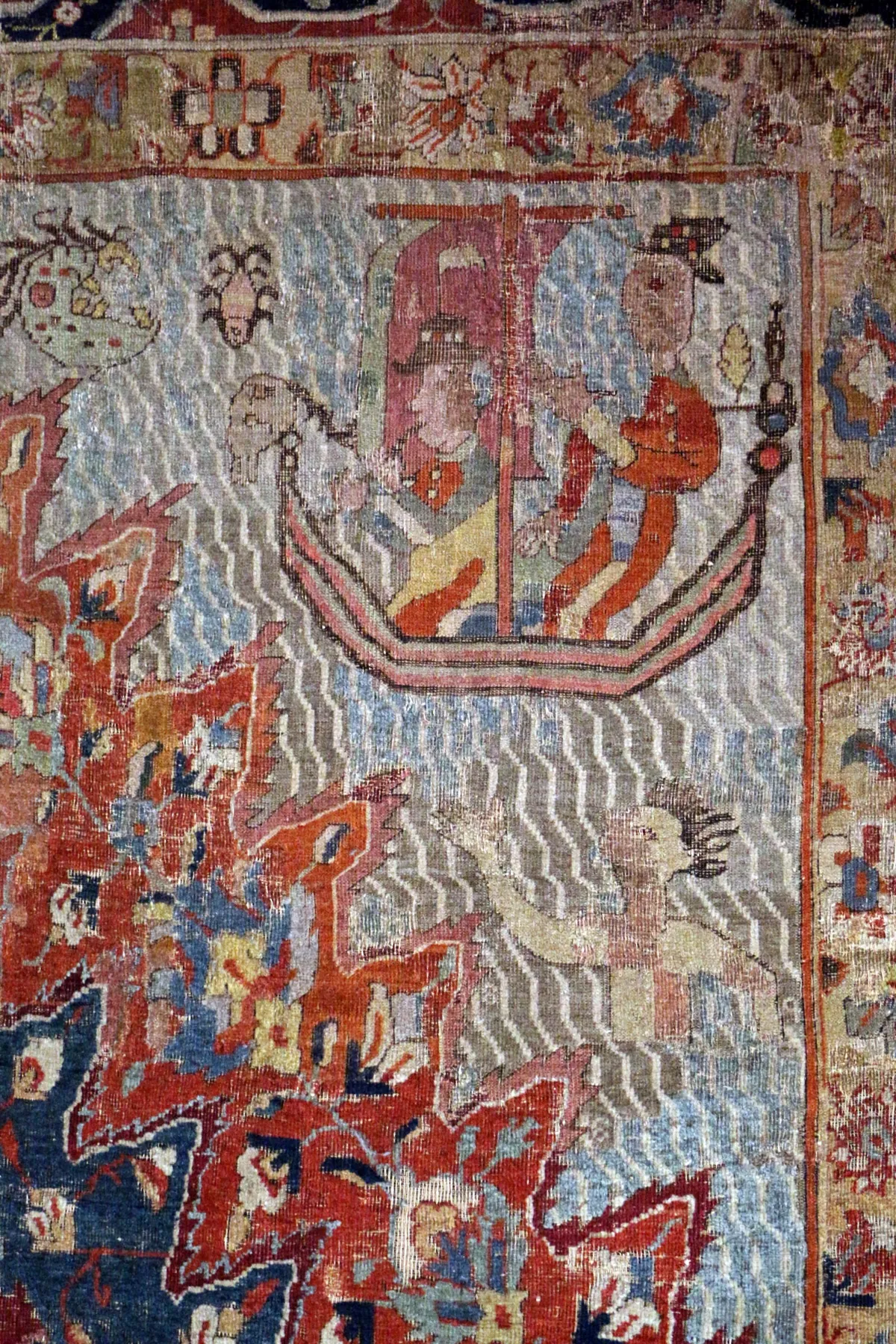
The Sea Wave carpet reflects that world. Sailing ships, seafarers in European dress and sea creatures alongside traditional ornament bring together two different visual worlds.
The name "Portuguese Carpet" comes from these features. Scholars believe this group of carpets may have been woven for Portuguese clients or to their taste, although who first ordered this piece is not known for certain.
The architecture of the design: a sea flowing across the carpet
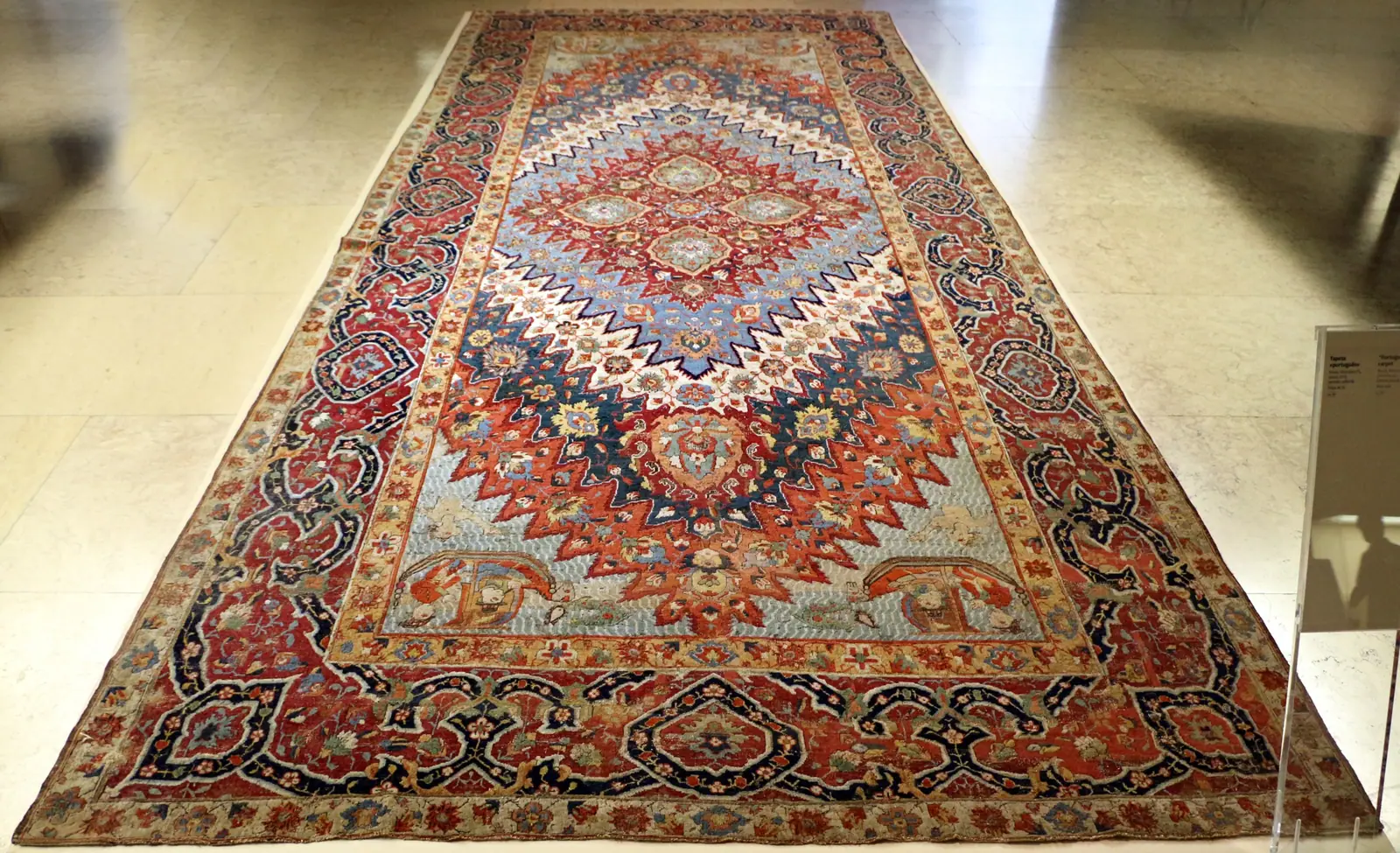
At the centre lies a large medallion covered with plants, flowers and fine ornament. Around it, layers of broken, serrated shapes in different colours suggest wave after wave.
Shades of blue, from deep to light, give the water depth and movement. At both ends of the carpet are scenes of sailing ships and European travellers, completed by sea creatures and human figures. Here the sea is not just decoration; it is part of the carpet's story.
Details of the Sea Wave carpet (from the MAK Vienna catalogue record)
Name: So-called Portuguese Carpet
Period: early 17th century, Safavid era
Place of weaving in the museum record: Greater Khorasan
Weaver: unknown
Size: 680 × 313 cm (about 21.3 m²)
Warp and weft: cotton
Pile: wool
Knot: asymmetric (Persian)
Held at: MAK – Museum of Applied Arts, Vienna, Austria
Inventory number: T 8339
Why the Sea Wave carpet matters
Its importance is not only its four centuries or its size. It shows how carpet weaving could go beyond familiar patterns to tell the story of cultural and trade links between distant lands. In many classical carpets nature appears as a garden, a flower bed or a hunting ground; in the Sea Wave carpet it appears as a stormy sea.
It is also an important example for studying how international markets shaped the design of fine textiles. European elements beside Eastern motifs show that the designers and weavers of the time knew the taste and culture of far-off buyers.
The Sea Wave carpet at the 2026 Vienna exhibition
The carpet was shown in the MAK exhibition "GLANZSTÜCKE", from 10 June to 27 September 2026, alongside jewellery by Van Cleef & Arpels. In the section on travel, the Portuguese Carpet was placed next to a model of a historic sailing ship, highlighting the role of travel, seafaring and cultural exchange in the decorative arts.
Closing
The Sea Wave carpet is more than a historic weaving: in it, weaving skill, artistic imagination and the memory of sea voyages come together. More than four centuries on, it remains one of the finest examples of sea imagery in the history of carpet art, a heritage in which every knot tells part of the history of culture and art.
Source: the MAK – Museum of Applied Arts, Vienna, catalogue record of the So-called Portuguese Carpet (inv. no. T 8339). See photographs of the carpet on the museum page: sammlung.mak.at/en/collect/so-called-portuguese-carpet_98332
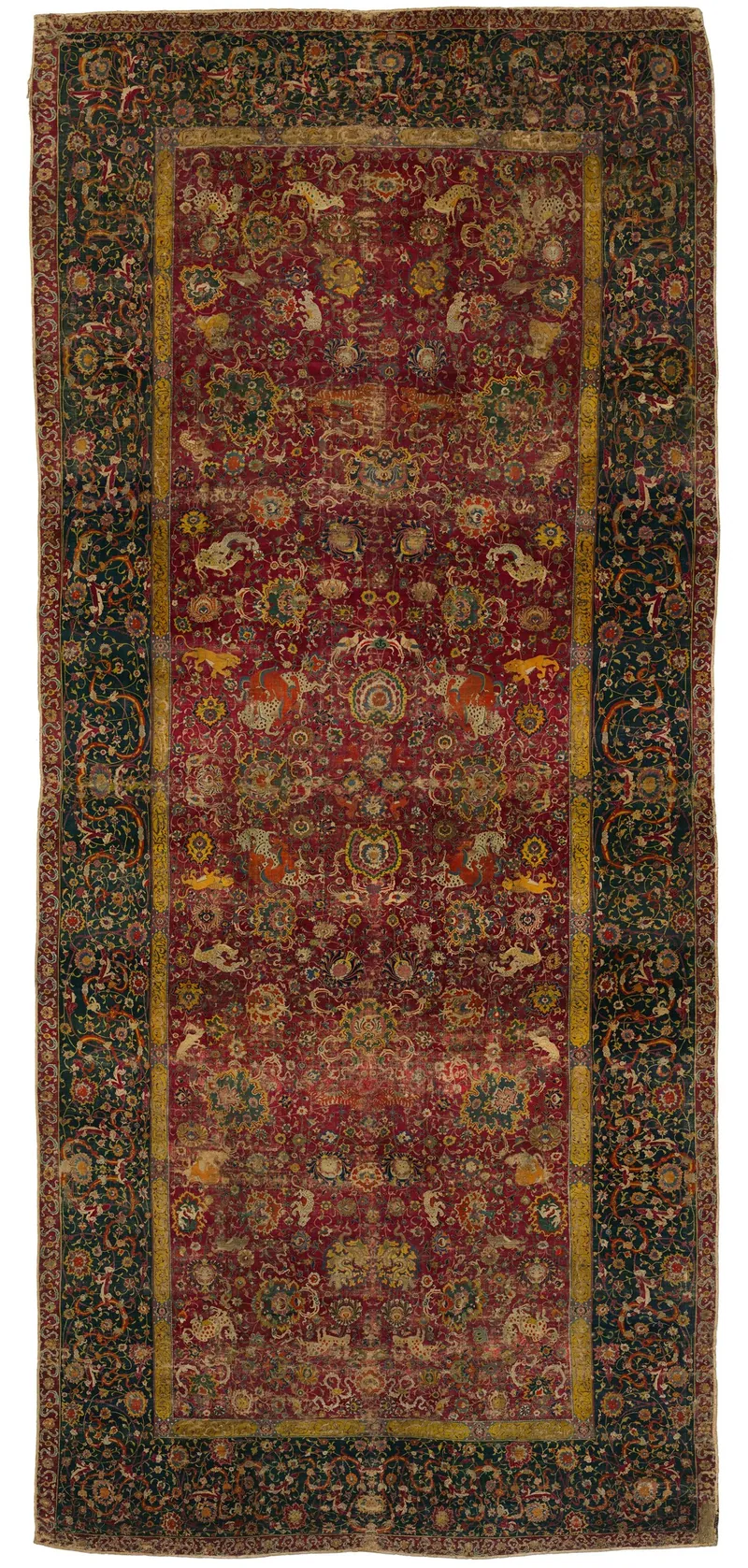
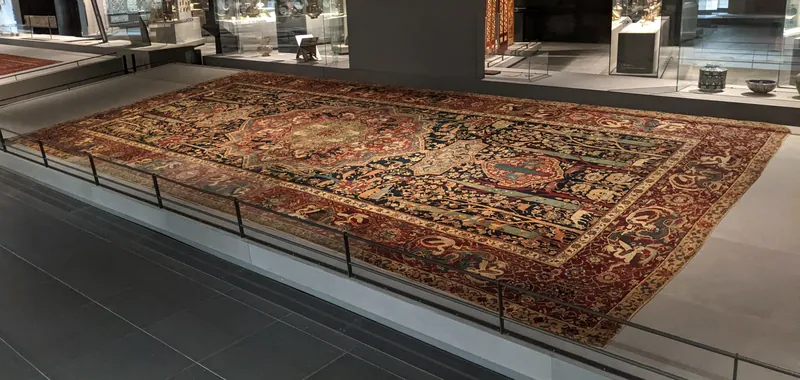
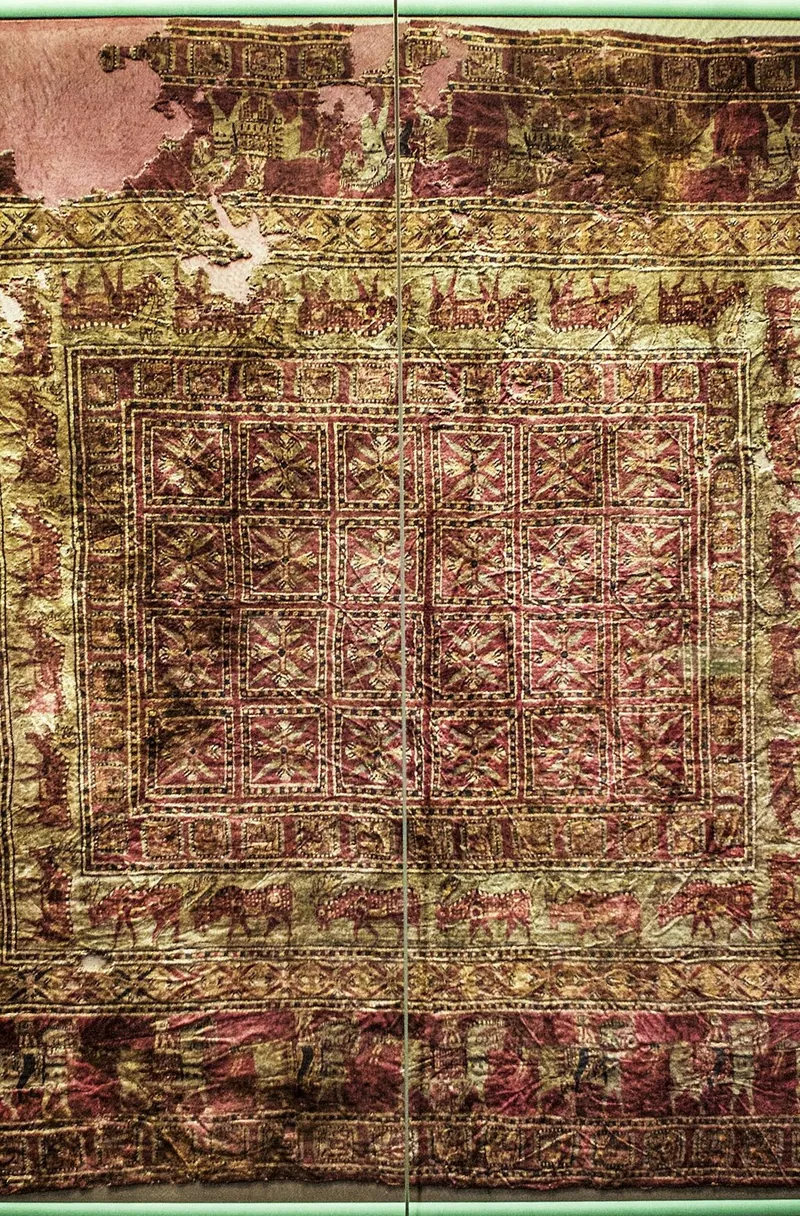
About the photos: the photographs of the Vienna carpet are not openly licensed, so the photos on this page show a sister carpet of the same "Portuguese" group, with the same ships and waves, in the Calouste Gulbenkian Museum, Lisbon. Photos by Sailko on Wikimedia Commons, CC BY 3.0.