The Wagner Garden Carpet: a 400-Year-Old Kerman Masterpiece in Scotland
2026-11-12
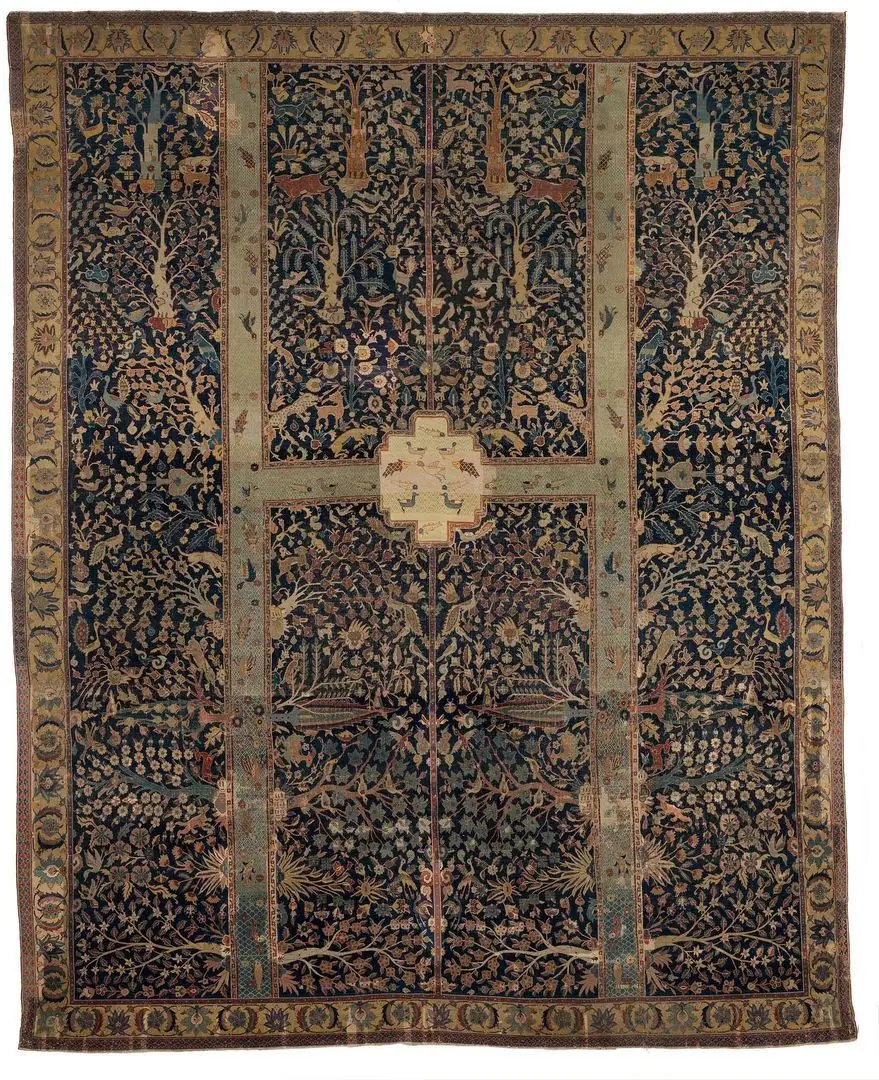
The Wagner Garden Carpet is one of the most precious surviving Persian garden carpets and a masterpiece of Safavid weaving. About 400 years old, it was woven in Kerman.
It holds a special place in world art history not only for the fineness of its weaving and its complex design but for its rare portrayal of the Persian garden. The Metropolitan Museum of Art has described it as the third-oldest known Persian garden carpet.
A garden in eternal spring
Nature is shown here in an astonishingly lively way. Streams, cypress trees, flowering shrubs, birds, fish and many animals sit together in an ordered space.
Unlike many traditional carpets with a central medallion and geometric or arabesque patterns, the Wagner carpet presents a whole Persian garden. Its layout follows the historic chahar bagh, the four-part garden in which channels, pools and green spaces give nature a geometric order.
Two long water channels, joined by crossing paths, divide the garden into its parts, giving the whole carpet a sense of flowing water and life.
Animals and symbols of nature
Among the leaves and flowers are lions, leopards, deer, foxes, peacocks, ducks, doves, butterflies and fish. They lift the carpet beyond decoration into a living world of peace and beauty, and even the struggle of hunter and hunted.
The Persian garden can be read as a symbol of paradise, abundance and natural harmony, ideas that run deep in Persian poetry and literature.
Why "Wagner"?
The name has nothing to do with the place of weaving or the Persian designer: it comes from a German owner of the carpet in the early twentieth century.
In 1939 the Scottish collector Sir William Burrell bought the carpet and kept it in his own castle. In 1944 he gave his art collection, including this carpet, to the city of Glasgow.
On show around the world
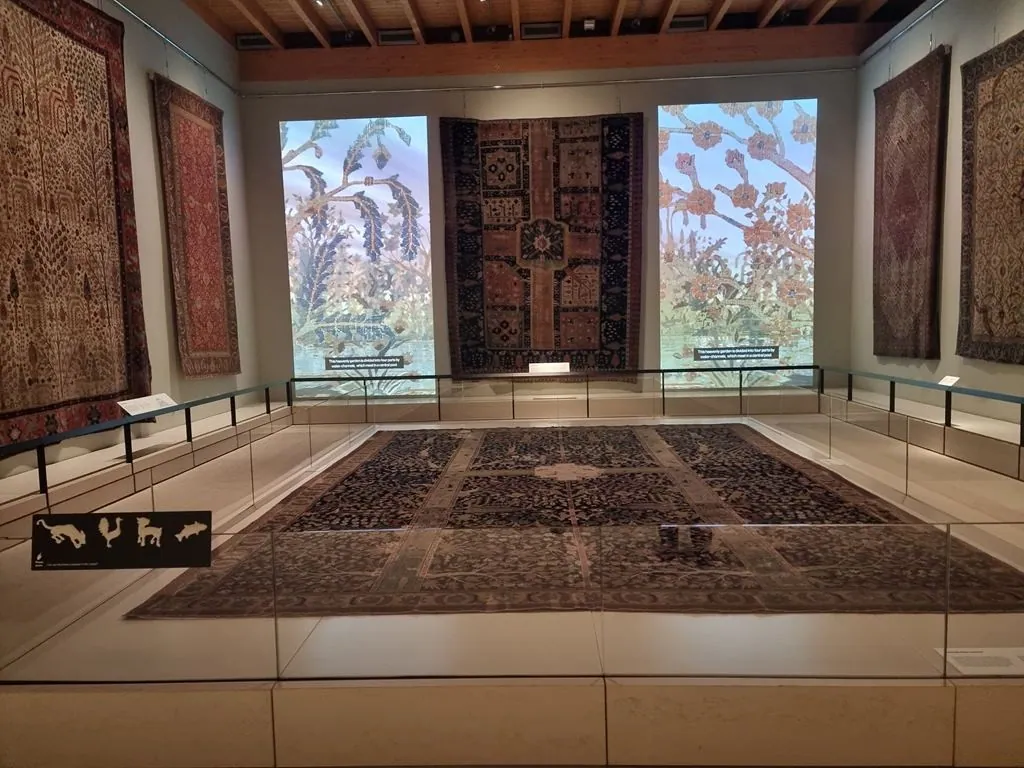
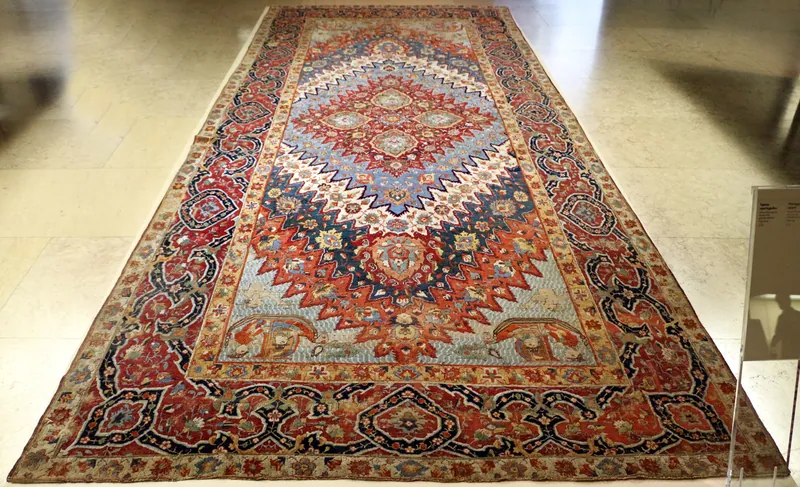
The Wagner Garden Carpet was shown in 2018 at The Metropolitan Museum of Art in New York and then at the Museum of Fine Arts, Houston, and was also presented at the Aga Khan Museum in Toronto. It belongs to The Burrell Collection in Glasgow and, since the collection reopened in 2022, has been on display among its major works.
Its place in the history of the Persian rug
The Wagner Garden Carpet is a precious record of how carpet weaving, Persian garden design and Safavid aesthetics came together. It shows that centuries ago Persian artists could create a complex landscape, full of movement and story, with nothing but warp, weft and knots.
Its many plants and animals, the precise order of its water channels and its countless details make it one of the outstanding works of Iran's artistic heritage.
Details of the Wagner Garden Carpet
Name: Wagner Garden Carpet
Period: Safavid, early 17th century
Place: Kerman, Iran
Size: 530.9 × 431.8 cm (about 22.9 m²)
Pile: wool
Warp: cotton
Weft: wool, cotton and silk
Design: Persian garden, chahar bagh
Held at: The Burrell Collection, Glasgow, Scotland
Museum number: 9.2
Sources: Glasgow Museums Collections (collections.glasgowmuseums.com), The Metropolitan Museum of Art and The Burrell Collection.
Photos from Wikimedia Commons, freely licensed: full view of the carpet (public domain); the carpet on display at the Burrell Collection, by Oliver Dixon (CC BY-SA 2.0).