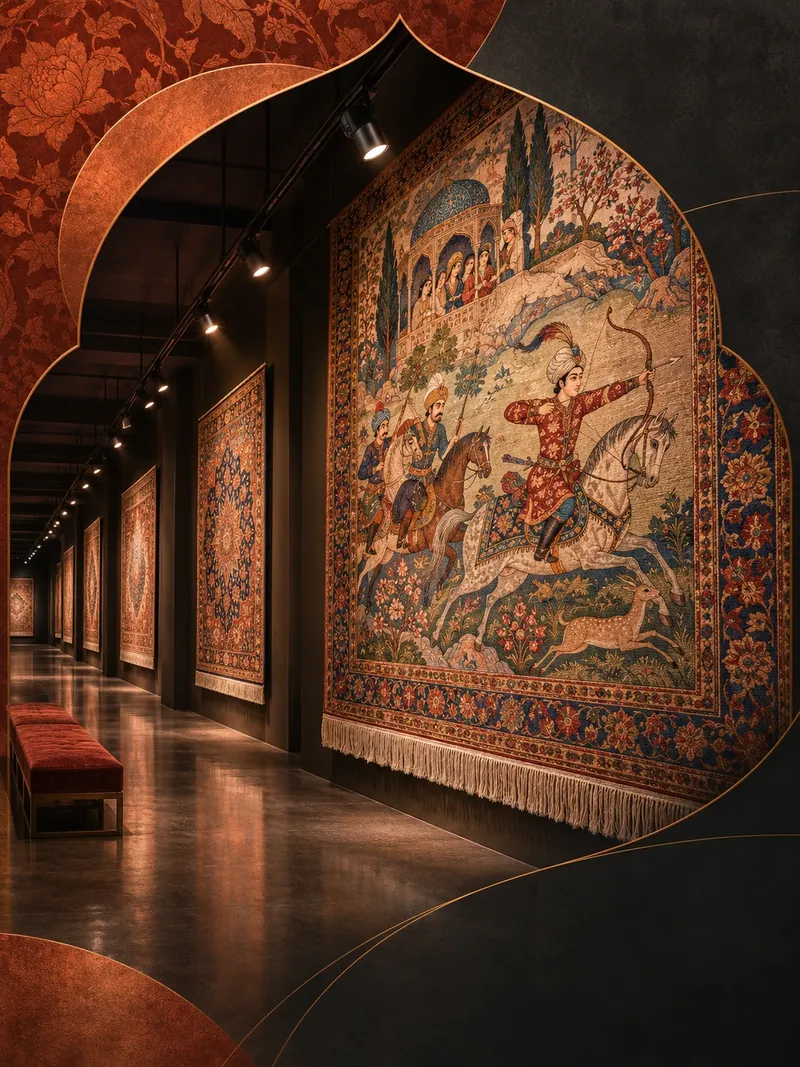
The Mantes Carpet: a 500-Year-Old Safavid Masterpiece at the Louvre
2026-11-12
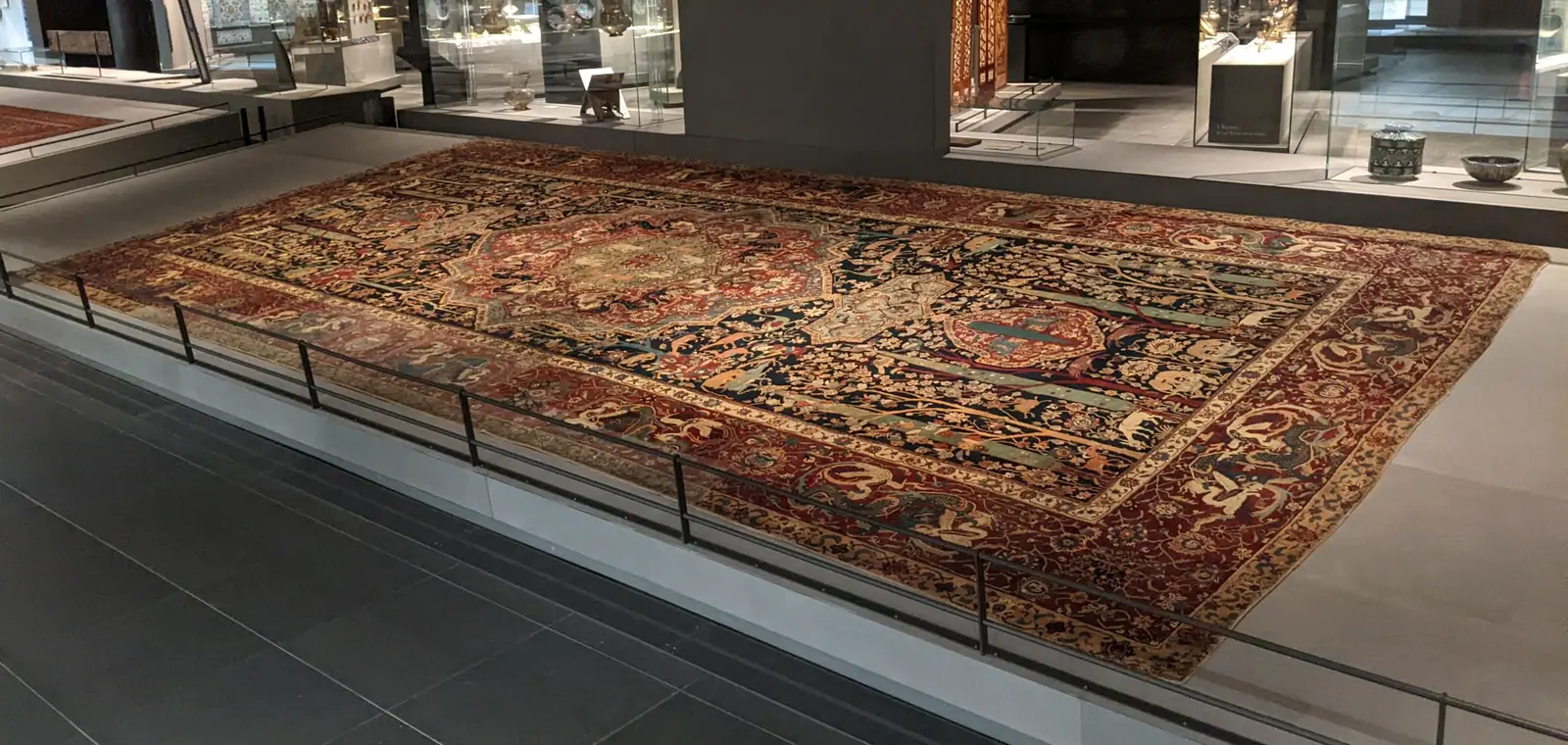
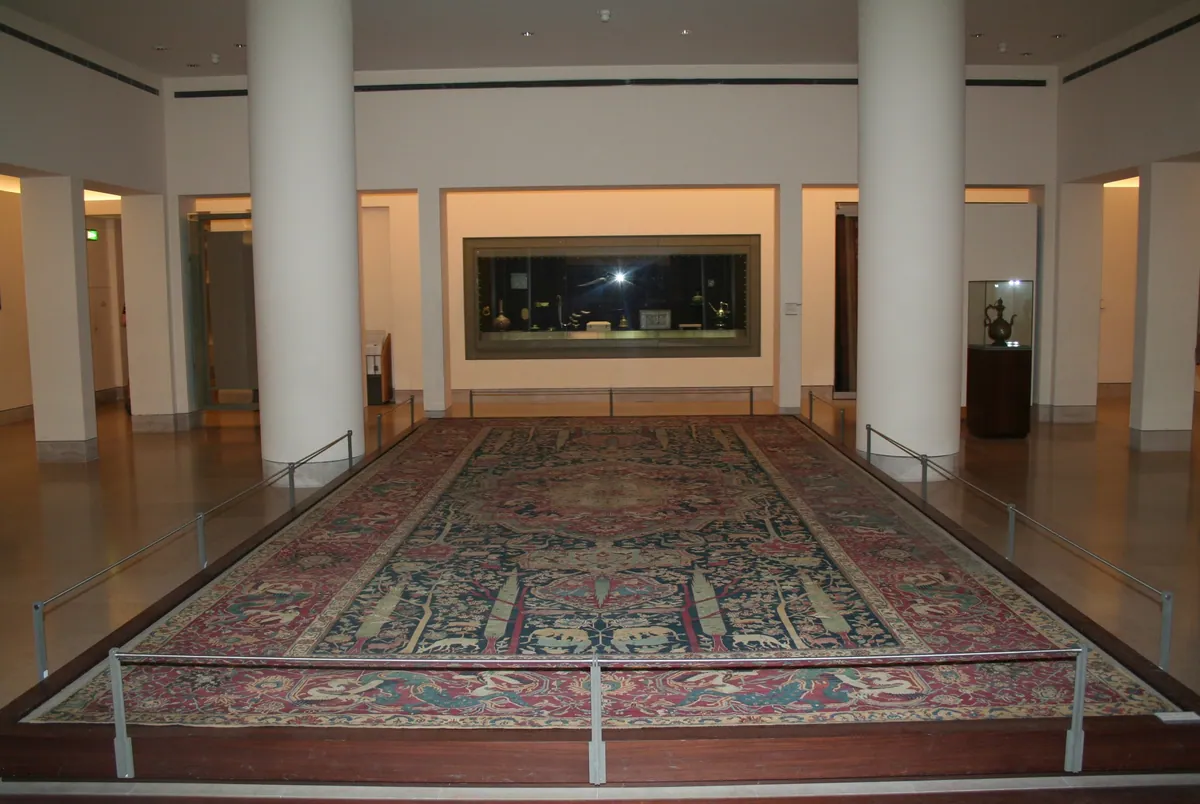
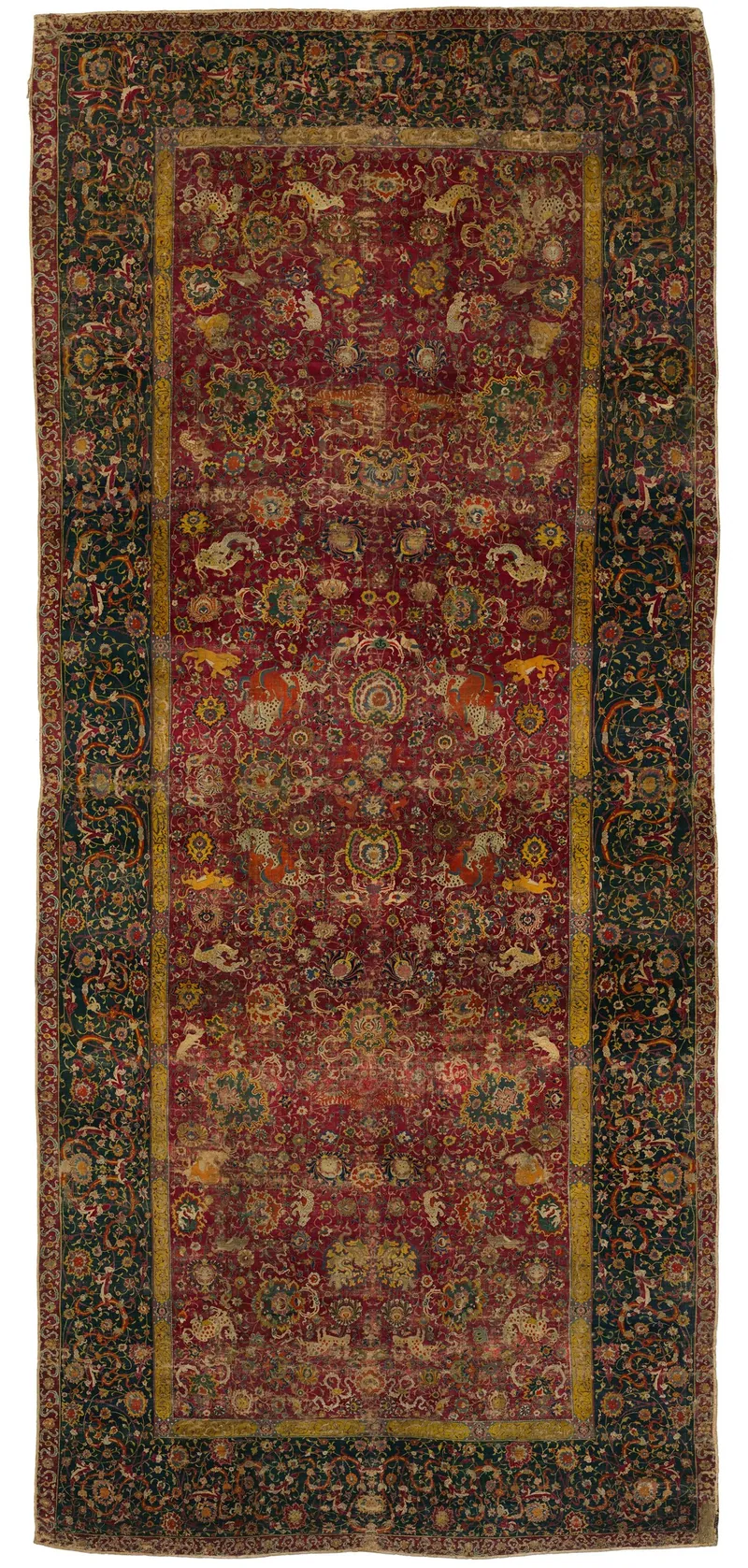
The Mantes Carpet is one of the finest surviving examples of Persian carpet weaving from the Safavid era: a masterpiece almost five centuries old, now held in the Islamic Art collection of the Louvre in Paris. Nearly eight metres long and four metres wide, it presents a remarkable picture of nature, Persian gardens, mythical beasts and the matchless skill of Iranian weavers of the sixteenth century.
According to the Louvre's official record, it was woven between 1530 and 1550, under Safavid rule, probably in north-western Iran. With its intricate mix of plant and animal motifs, its rich colours and the artful design of its central medallion, the Mantes Carpet holds a special place in the history of the Persian rug.
A garden of paradise in warp and weft
One of the carpet's outstanding features is its wide, detailed imagery. At its centre is a star-shaped medallion in which a simurgh, a dragon and four leopards are set in lively motion.
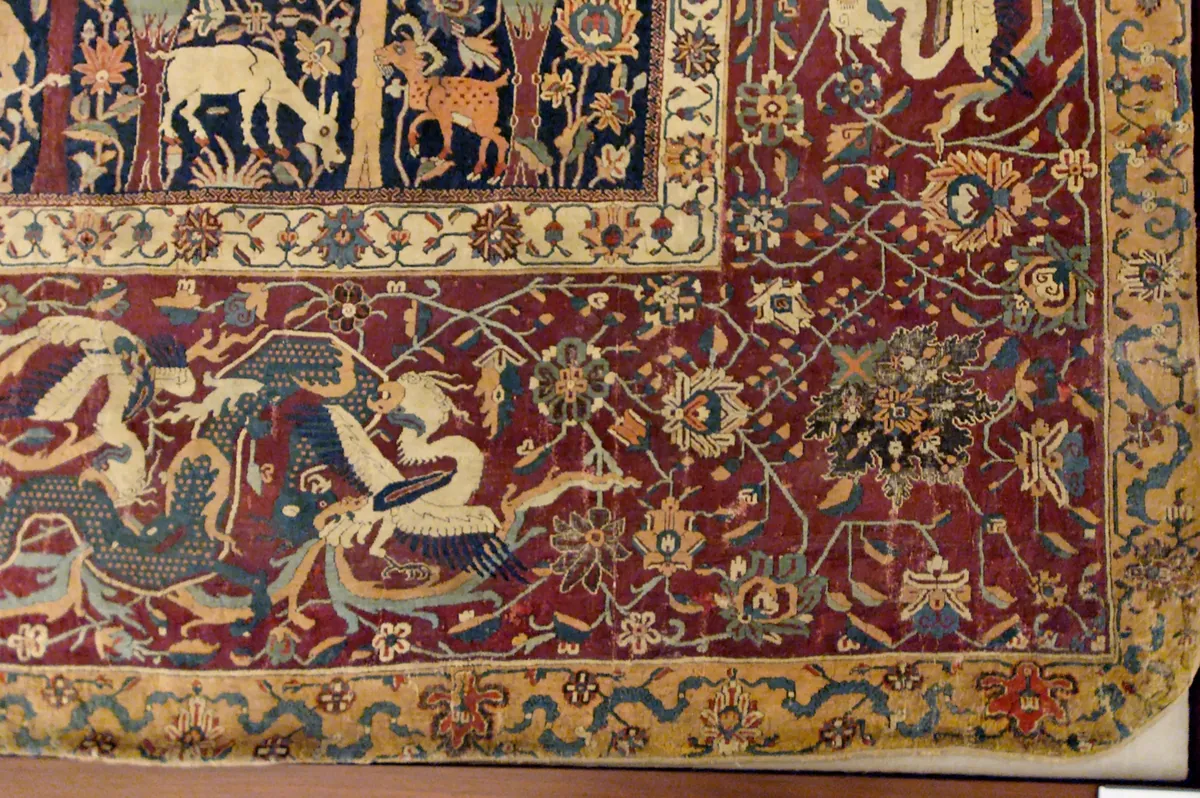
Around the medallion, hunting scenes, birds, animals, trees and many kinds of flowers fill the field. Beyond decoration, they recall the Persian garden and symbolic visions of paradise.
Red, navy and green sit in striking harmony with shades of cream and gold. The influence of Persian pictorial traditions, and of some East Asian elements, can be seen in the mythical beasts and the composition.
From a French church to the Louvre
The name comes from the town of Mantes-la-Jolie near Paris. The carpet was kept for years in the historic church of Notre-Dame de Mantes, and became known by its name.
How it travelled from Iran to France is not known, but museum records show that it was bought from Mantes in 1912 and entered the Louvre collection. It is an important example of Persian carpets in European churches and art collections, and a witness to the worldwide value of Iran's finest weavings.
Details of the Mantes Carpet
Name: Mantes Carpet
Period: Safavid
Woven: 1530–1550
Place: attributed to north-western Iran
Size: 780 × 390 cm
Pile: wool
Warp and weft: cotton
Knot: asymmetric (Persian)
Held at: Musée du Louvre, France
Inventory number: OA 6610
Entered the museum: 1912
A heritage of timeless Iranian art
The Mantes Carpet is not just a historic weaving; it is a precious record of how Persian painting, design and weaving came together. Its fine motifs and pictorial stories show that in the Safavid era a carpet was far more than a floor covering: it was a work of art with a cultural and historical identity.
Its place in one of the world's great museums is a reminder that the handmade Persian rug is part of humanity's artistic heritage, still inspiring artists, scholars and art lovers around the world after centuries.
Source: the Louvre's official record of the Mantes Carpet (OA 6610), collections.louvre.fr
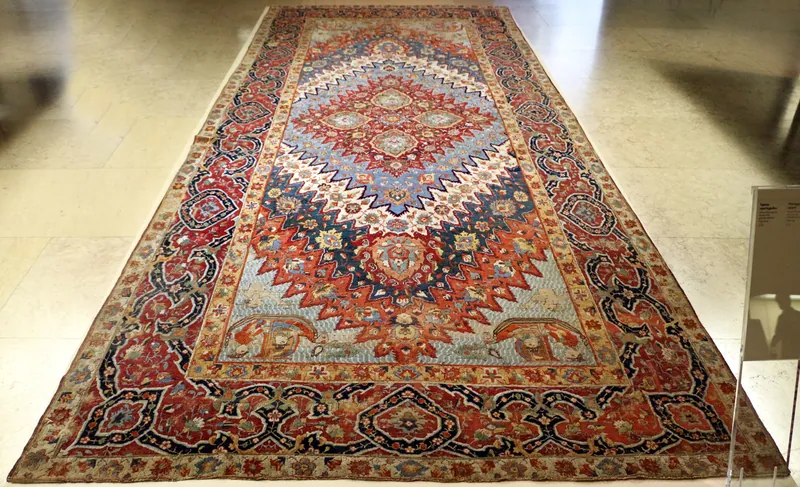
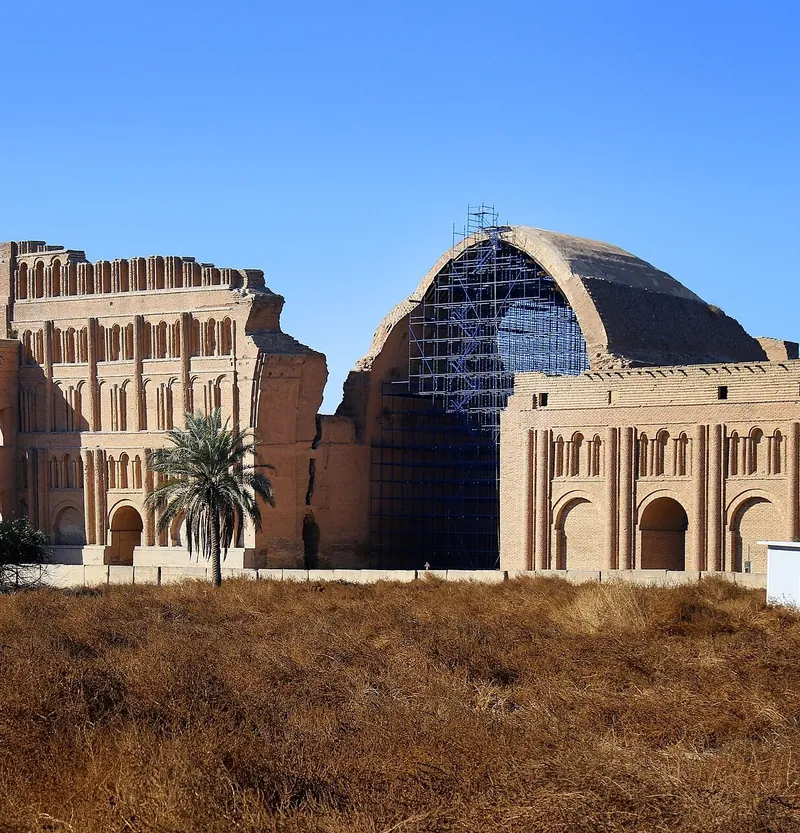
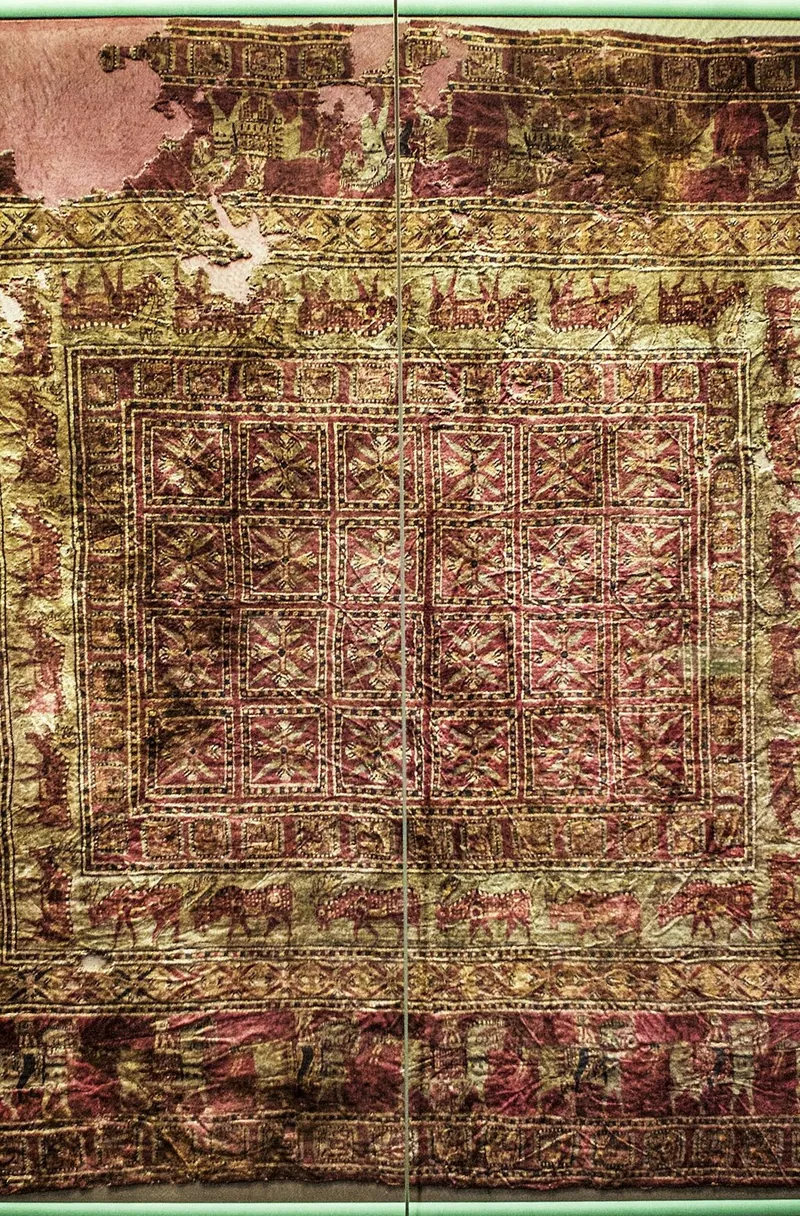
Photos from Wikimedia Commons, freely licensed: full view by Shonagon (CC0); hall view by PersianDutchNetwork (public domain); border detail by Jastrow (public domain).