The Emperor's Carpet: from the Safavid Court to the Metropolitan Museum
2026-11-12
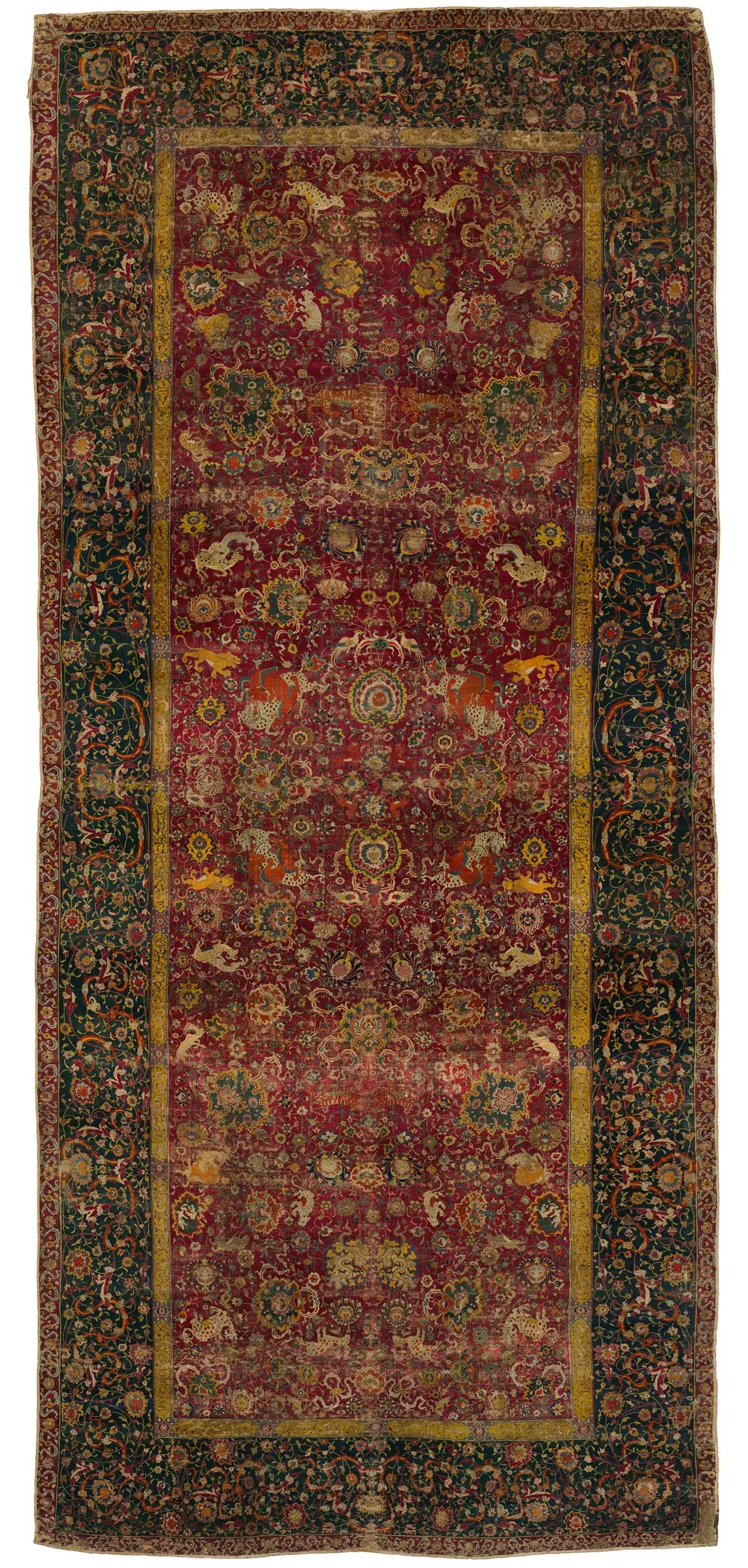
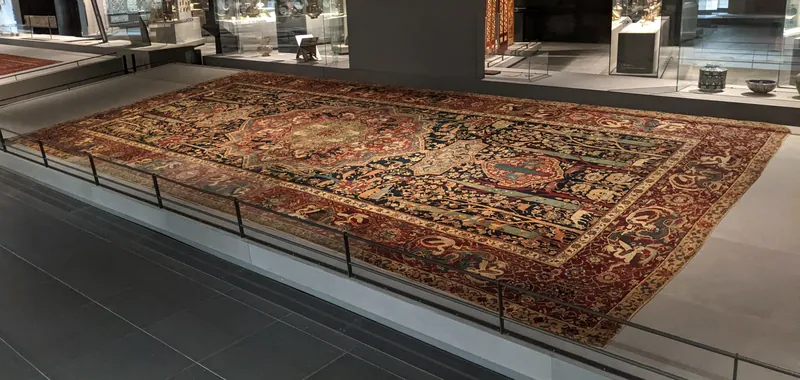
Among the historic masterpieces of the Persian rug that now grace the world's great museums, the Emperor's Carpet holds a special place. Woven in the second half of the sixteenth century under the Safavids, it is one of the finest examples of carpet weaving from Iran's royal workshops, and is now held in the Islamic Art collection of The Metropolitan Museum of Art in New York.
Nearly 7.6 metres long and 3.4 metres wide, it is a magnificent work in which Persian design, dyeing and weaving reach a rare harmony.
A garden of paradise in warp and weft
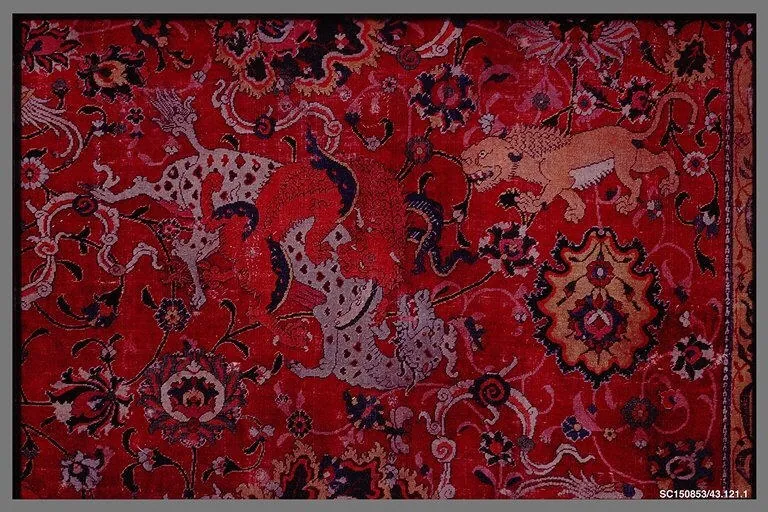
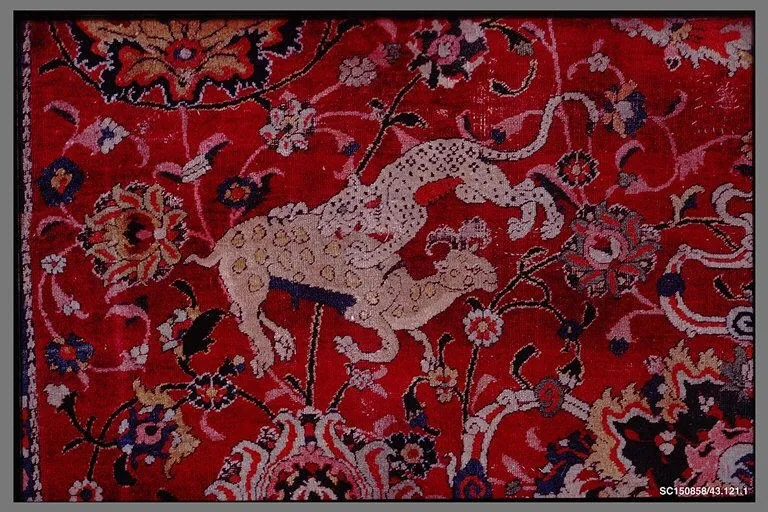
One of its defining features is the intricate, artful mix of plant and animal motifs. Across the field, scrolling stems, blossoms, large leaves, arabesques and cloud bands sit side by side.
Among them appear lions, tigers, leopards, buffalo, birds and mythical creatures such as dragons. With the remarkable order of the plant forms, they create a dreamlike world, as if the Persian artist had set a whole world of life, movement and beauty upon the carpet.
Persian poetry in the border of a world masterpiece
A precious feature of the carpet is a Persian inscription in its inner border, taken from the poems of Zahir al-Din Faryabi, the celebrated twelfth-century Iranian poet. The verses speak of spring, green nature and the beauty of the garden, a poetic link between carpet weaving and classical Persian literature.
So the Emperor's Carpet is not only a brilliant work of Persian textile art but also a meeting of Persian poetry, painting and culture.
From Safavid workshops to the residences of European emperors
The name comes from the carpet's history in European royal collections. According to the Met, it once adorned the summer residence of the Habsburg emperors.
Some historical accounts say that this carpet and its pair were given by Peter the Great, Tsar of Russia, to Leopold I in the late seventeenth century, although this has not been proven.
The carpet entered the collection of The Metropolitan Museum of Art in 1943 and is today one of the treasures of its Islamic Art department.
Finesse beyond time
The Emperor's Carpet has a silk warp and weft and a wool pile. Its asymmetric knot, fine materials and highly complex design show the great skill of Safavid weavers.
More than four centuries after it was made, the Emperor's Carpet remains proof of the Persian rug's exceptional place in world art history, a reminder that a handmade Persian rug is far more than a useful object: it carries the history, culture, creativity and artistic identity of Iran.
Details of the Emperor's Carpet
Name: The Emperor's Carpet
Period: Safavid, second half of the 16th century
Origin: Iran; the city of weaving is not known for certain
Size: 759.5 × 339.1 cm (about 25.8 m²)
Recorded weight: 65.3 kg, stored on a roll
Warp and weft: silk
Pile: wool
Knot: asymmetric (Persian)
Accession number: 43.121.1
Entered the collection: 1943
On view: Gallery 462, The Metropolitan Museum of Art, New York
Source: the official page of the Emperor's Carpet at The Metropolitan Museum of Art, metmuseum.org/art/collection/search/450509
Photos: The Metropolitan Museum of Art, New York, Rogers Fund, 1943 (public domain, the museum's Open Access programme).